Laws and rules change and depend on your situation. Before acting on anything here that could affect your rights or immigration status, confirm with a qualified attorney or an accredited legal representative.
Refugee Medical Assistance (RMA) is a short-term federal health coverage program for newly arrived refugees, similar to Medicaid. It helps pay for your medical screening in the first weeks after arrival, but it runs out after a set period, and the length of coverage has changed recently and differs by state and when you arrived.
If you came to the United States as a refugee or asylee, you have already done something that takes great strength. You survived, you crossed borders, and you started a new life in a new language. Along the way, many people carry stress or trauma from war, persecution, loss, or a hard journey. This is common, it is a human response to inhuman events, and it is treatable. Feeling on edge, having trouble sleeping, reliving frightening memories, or feeling numb does not mean something is wrong with you. It means you went through too much, and your mind and body are still catching up. Most people who feel this way get better over time, with safety, rest, and, when they want it, care.
- Stress or trauma after war, loss, or a hard journey is common, a human response to inhuman events, and treatable.
- Your resettlement caseworker and the Office of Refugee Resettlement (ORR) can connect you to help.
- Getting care will not affect your immigration status, and what you share stays private.
The health screening after arrival often includes emotional health
Most refugees are offered a health check within the first weeks after arriving, usually within the first 90 days. In most states this exam is run by the state or local refugee health program, often through a health department or a clinic that works with it (Pezzi et al., 2020, PLOS Medicine). The visit looks at your whole health. It usually includes your medical history, a physical exam, tests for a few infections such as tuberculosis and hepatitis B, a check of your vaccines, and a few gentle questions about how you are feeling, sleeping, and coping (Pezzi et al., 2020; CDC, Mental Health: Refugee Health Domestic Guidance).
The emotional part is not a test you can pass or fail, and it is not meant to label you. Its only goal is to notice whether you could use extra support and to connect you to it (CDC). The provider may ask about sleep, appetite, nightmares, headaches, or body aches that have no clear medical cause, because these can be signs that stress is sitting in the body (CDC). They may use a short set of questions made for newcomers, called the Refugee Health Screener-15. It was built and tested to catch early signs of anxiety, depression, and post-traumatic stress across many refugee groups and languages (Hollifield et al., 2013, General Hospital Psychiatry), and it can be used with anyone age 14 or older (CDC).
You can answer honestly. What you say is kept private, and you have the right to a free, qualified interpreter in your language. You do not have to bring your own interpreter, and you should not have to use your child to translate. If the questions bring up hard feelings, that is normal, and you can pause any time. If you would rather not answer something that day, you can say, “I am not ready to talk about that yet.” You can also ask, “Can someone follow up with me about this later?” so the door stays open. Not every clinic remembers to ask about emotional health, since many focus first on infections and vaccines (Pezzi et al., 2020). If no one brings it up and you want to talk, you can raise it yourself.
"I have been feeling very stressed. Can we talk about that?"
"I am not ready to talk about that yet."
"Can someone follow up with me about this later?"
Your resettlement agency and ORR can connect you to services
You do not have to find help by yourself. The federal Office of Refugee Resettlement (ORR) funds services built around being trauma-informed and strengths-based, and it works through local resettlement agencies that help refugees and asylees settle in (ORR). Your caseworker at the resettlement agency is a good first person to ask. You can say, simply, “I have been feeling very stressed, and I would like to talk to someone.”
ORR also funds a Refugee Health Promotion program. Its three goals are to build health literacy, coordinate physical and mental health care, and organize wellness groups. Local agencies use it for health education classes, medical and mental health navigation, and adjustment groups, skill-building networks, or peer support meetings (ORR, Refugee Health Promotion). This kind of support can be available for up to five years after you become eligible (ORR, Refugee Health Promotion).
Newly arrived refugees, and asylees once they are eligible, may also qualify for Refugee Medical Assistance (RMA), which provides health coverage similar to Medicaid and helps pay for that first medical screening, and for Refugee Cash Assistance (RCA), which helps with basic needs like food, housing, and transportation (ORR, Cash and Medical Assistance). These benefits are time-limited, and the length of coverage has changed recently. Under the rule in place now, people with an ORR eligibility date on or after May 5, 2025 receive four months of RMA (ORR, Benefits and Services Available for Asylees).
One timing detail matters if you are an asylee. Your clock for these benefits usually starts on the day you are granted asylum, not the day you first entered the country (ORR, Asylee Eligibility for Refugee Resettlement Program Benefits). A rule like this can change again, and it can depend on your state and your dates, so confirm the details for your own case before you count on them. Your resettlement agency or your state refugee office can tell you what applies to you right now.
Specialized programs for trauma and torture survivors exist
Some people lived through torture or extreme violence, and there are programs made specifically for this. The federal government funds Services for Survivors of Torture, a program that helps people who were tortured in another country and now live in the United States. It supports survivors and their families to rebuild their health and dignity, and it can include medical care, counseling, social support, and legal help (ORR, Services for Survivors of Torture). Congress created it through the Torture Victims Relief Act of 1998 (ORR, Services for Survivors of Torture).
Two things about this program are worth knowing.
You do not need any particular immigration status to receive help, and there is no time limit on how long you can get it.
Research that pooled many studies found that, among people who lived through mass conflict and displacement, those who had been tortured were the most likely to carry post-traumatic stress afterward (Steel et al., 2009, JAMA). If that is part of your story, these programs were built with you in mind.
Across the country, torture-survivor and refugee trauma centers offer counseling, medical care, and support in many languages, often with staff who understand refugee experiences. The National Consortium of Torture Treatment Programs lists member centers nationwide (ncttp.org, a non-government resource). To understand the conditions these programs treat, plain-language pages from the National Institute of Mental Health on post-traumatic stress and MedlinePlus can help, and NIMH on coping with traumatic events offers steady, practical guidance.
Care that serves everyone
Even outside refugee-specific programs, support is open to you. Community health centers serve everyone, charge on a sliding scale based on income, and offer free interpreters; find one at findahealthcenter.hrsa.gov. To search treatment programs confidentially, use FindTreatment.gov, or dial 2-1-1 for local help in many languages. And anyone in emotional distress can call or text 988, free and confidential (SAMHSA). If you call and speak little English, you can say the name of your language, and 988 will connect you to an interpreter; this phone service reaches interpreters in more than 240 languages (988 Suicide & Crisis Lifeline). For disaster- or conflict-related distress, the Disaster Distress Helpline (1-800-985-5990) offers multilingual crisis counseling.
Anyone in emotional distress can call or text 988, free and confidential. If you speak little English, say the name of your language, and 988 will connect you to an interpreter; this service reaches interpreters in more than 240 languages.
Asking for help is normal
In many cultures, mental health is not something you talk about, and that is understandable. Here, asking for help is ordinary, and what you share with a clinician is confidential. To think through how care fits your own culture and beliefs, see mental health across cultures and common conditions explained in plain words. If cost or coverage worries you, getting care if you are uninsured walks through the options. A reasonable first step is to ask your resettlement caseworker or a community health worker to sit with you and make one call. You can also ask the chatbot to help you put your feelings into words in your own language, then confirm anything important with a person you trust.
What you may be feeling is common, and you can get better
You are not weak, and you are not alone in this. Careful studies of refugees who have resettled found that about 1 in 11 adults had post-traumatic stress disorder and about 1 in 20 had major depression (Fazel et al., 2005, The Lancet). That is higher than for people born in the host country, roughly ten times higher for post-traumatic stress, and it also means most refugees do not develop these conditions (Fazel et al., 2005). Federal health guidance puts it plainly: most refugees go on to live healthy lives after resettlement, and the symptoms that do come up can usually be eased with care (CDC, Mental Health: Refugee Health Domestic Guidance).
There is even a name for the deep grief many people feel after leaving home: cultural bereavement. It is the sorrow of losing your country, your language, your community, your work, and the life you knew and expected. Researchers describe this grief as a normal human response, and for many people it is part of healing, not a sign that something is permanently broken (Eisenbruch, 1991, Social Science & Medicine). Feeling sad, homesick, angry, or numb after all you have carried does not mean you are failing. It means you are human, and it can get lighter, especially with safety, time, and people who understand.
Getting help will not affect your immigration status, and it stays private
Many people worry that asking for mental health care could hurt their case or their future in this country. For refugees and asylees, it does not. Under federal immigration rules, refugees and asylees are not subject to the “public charge” test, and using Medicaid or other health services is not counted against anyone in a public charge decision (USCIS, Policy Manual, Public Charge Ground of Inadmissibility). Getting counseling, going to a clinic, or using RMA is your right, and it will not be held against you.
What you share is also private. What you tell a clinician, a caseworker, or a trained interpreter is kept confidential, and clinics cannot share your health information without your permission except in narrow situations meant to keep someone safe. The Services for Survivors of Torture program, for example, helps people no matter their immigration status (ORR, Services for Survivors of Torture). If privacy is a worry for you, you can ask before you begin: “Who will see what I say here?” A good provider will be glad you asked and will explain it clearly.
Sources
- 988 Suicide & Crisis Lifeline. Is the 988 Lifeline Available in Other Languages for Non-English Speakers? https://988lifeline.org/faq/calling-the-988-lifeline/faq-is-the-988-lifeline-available-in-other-languages-for-non-english-speakers/.
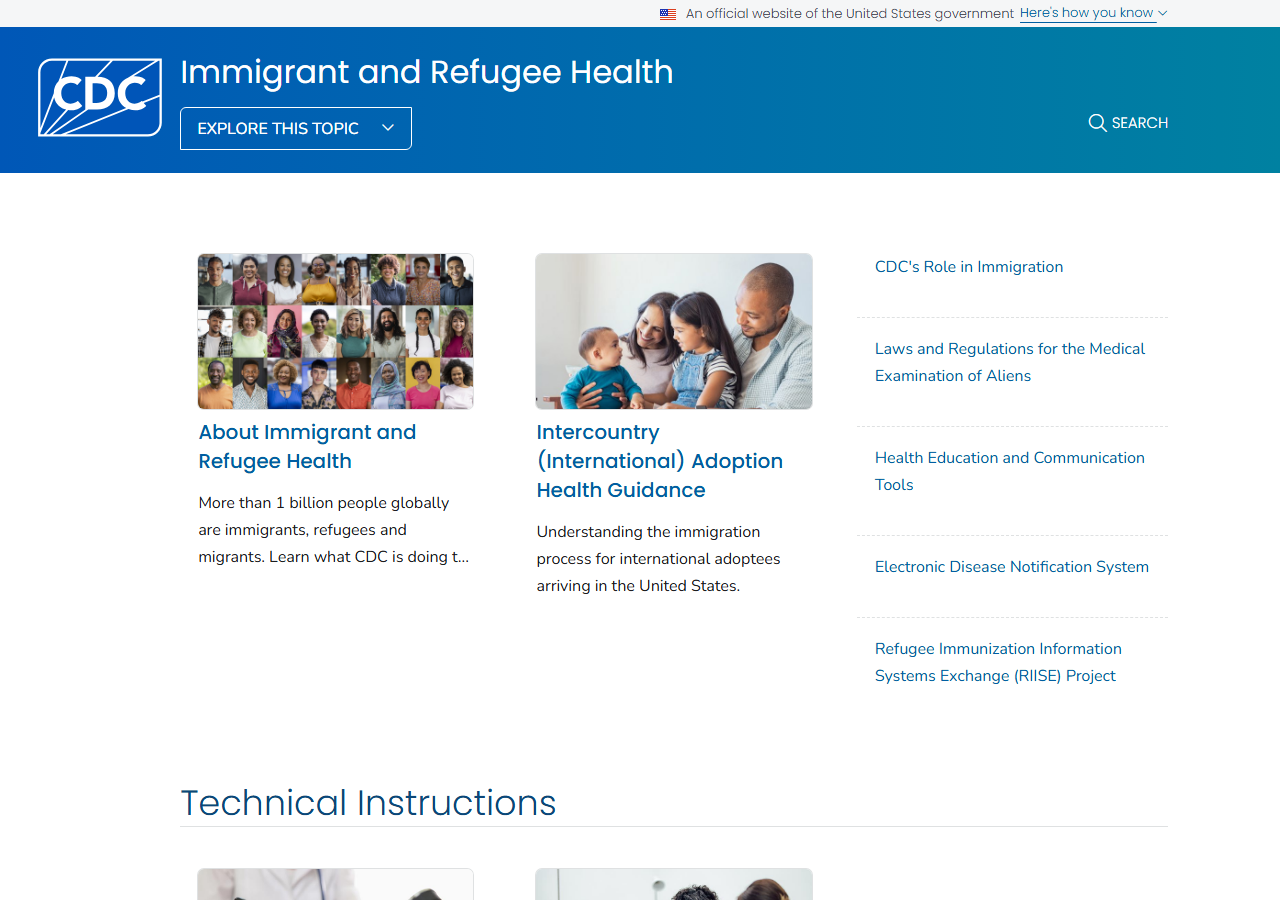
- Centers for Disease Control and Prevention (CDC). Immigrant and Refugee Health. https://www.cdc.gov/immigrant-refugee-health/index.html.
- Centers for Disease Control and Prevention (CDC). Mental Health: Refugee Health Domestic Guidance. https://www.cdc.gov/immigrant-refugee-health/hcp/domestic-guidance/mental-health.html.
- Eisenbruch, M. (1991). From Post-Traumatic Stress Disorder to Cultural Bereavement: Diagnosis of Southeast Asian Refugees. Social Science & Medicine, 33(6), 673-680. https://doi.org/10.1016/0277-9536(91)90021-4.
- Fazel, M., Wheeler, J., & Danesh, J. (2005). Prevalence of Serious Mental Disorder in 7000 Refugees Resettled in Western Countries: A Systematic Review. The Lancet, 365(9467), 1309-1314. https://doi.org/10.1016/S0140-6736(05)61027-6.
- Health Resources and Services Administration (HRSA). Find a Health Center. https://findahealthcenter.hrsa.gov/.
- Hollifield, M., Verbillis-Kolp, S., Farmer, B., Toolson, E. C., Woldehaimanot, T., Yamazaki, J., Holland, A., St. Clair, J., & SooHoo, J. (2013). The Refugee Health Screener-15 (RHS-15): Development and Validation of an Instrument for Anxiety, Depression, and PTSD in Refugees. General Hospital Psychiatry, 35(2), 202-209. https://doi.org/10.1016/j.genhosppsych.2012.12.002.
- MedlinePlus (National Library of Medicine). Post-Traumatic Stress Disorder. https://medlineplus.gov/posttraumaticstressdisorder.html.
- National Consortium of Torture Treatment Programs (NCTTP; non-government resource). https://www.ncttp.org/.
- National Institute of Mental Health (NIMH). Coping With Traumatic Events. https://www.nimh.nih.gov/health/topics/coping-with-traumatic-events.
- National Institute of Mental Health (NIMH). Post-Traumatic Stress Disorder (PTSD). https://www.nimh.nih.gov/health/topics/post-traumatic-stress-disorder-ptsd.
- Office of Refugee Resettlement (ORR), Administration for Children and Families. Asylee Eligibility for Refugee Resettlement Program Benefits. https://acf.gov/orr/policy-guidance/asylee-eligibility-refugee-resettlement-program-benefits-0.
- Office of Refugee Resettlement (ORR), Administration for Children and Families. Benefits and Services Available for Asylees. https://acf.gov/orr/fact-sheet/benefits-and-services-asylees.
- Office of Refugee Resettlement (ORR), Administration for Children and Families. Cash and Medical Assistance (Refugee Medical Assistance). https://acf.gov/orr/programs/refugees/cma.
- Office of Refugee Resettlement (ORR), Administration for Children and Families. Refugee Health Promotion. https://acf.gov/orr/programs/refugees/rhp.
- Office of Refugee Resettlement (ORR), Administration for Children and Families. ORR home page. https://acf.gov/orr.
- Office of Refugee Resettlement (ORR), Administration for Children and Families. Services for Survivors of Torture. https://acf.gov/orr/programs/refugees/services-survivors-torture.
- Pezzi, C., Lee, D., Kumar, G. S., Kawasaki, B., Kennedy, L., Aguirre, J., Titus, M., Ford, R., Mamo, B., Urban, K., Hughes, S., Payton, C., Scott, K., Montour, J., & Jentes, E. S. (2020). Health Screenings Administered During the Domestic Medical Examination of Refugees and Other Eligible Immigrants in Nine US States, 2014-2016: A Cross-Sectional Analysis. PLOS Medicine, 17(3), e1003065. https://doi.org/10.1371/journal.pmed.1003065.
- Steel, Z., Chey, T., Silove, D., Marnane, C., Bryant, R. A., & van Ommeren, M. (2009). Association of Torture and Other Potentially Traumatic Events With Mental Health Outcomes Among Populations Exposed to Mass Conflict and Displacement: A Systematic Review and Meta-Analysis. JAMA, 302(5), 537-549. https://doi.org/10.1001/jama.2009.1132.
- Substance Abuse and Mental Health Services Administration (SAMHSA). 988 Suicide & Crisis Lifeline. https://www.samhsa.gov/mental-health/988.
- Substance Abuse and Mental Health Services Administration (SAMHSA). Disaster Distress Helpline. https://www.samhsa.gov/find-help/helplines/disaster-distress-helpline.
- Substance Abuse and Mental Health Services Administration (SAMHSA). FindTreatment.gov. https://findtreatment.gov/.
- United Way. 211: Get Connected. Get Help. https://www.211.org/.
LINC is a research prototype, not a medical or legal service. Translation can be wrong; you have the right to a free, qualified interpreter. For anything high-stakes, do it with a community health worker or someone you trust. In a crisis, call or text 988, or 911 for immediate danger.