Costs, coverage, and eligibility vary by plan and by state, and the rules change. Use this as a general guide, and confirm the details with your insurance plan, the clinic, or a community health worker before you rely on them.
A CCBHC (Certified Community Behavioral Health Clinic) is a type of public mental health clinic that is required by federal rules to serve anyone who asks, regardless of their income, insurance status, or where they live. Fees are set on a sliding scale based on what you can afford, so cost is not a reason to be turned away.
When you look for mental health care in the United States, you will run into two main kinds of places: private practices and public, community mental health programs. They both offer real, professional care. They are built for somewhat different situations, and they reach you in different ways. This guide explains what each one is, clears up a common and costly misunderstanding about the word “private,” and helps you decide where to start.
- Two main paths: private practices you book directly, and public, community programs.
- "Private" does not mean expensive; most private therapists take insurance or Medicaid.
- CCBHCs and community health centers must serve anyone and cannot turn you away for inability to pay.
Private practice therapy
A private practice is a therapist, psychologist, or psychiatrist who runs their own office, either alone or in a small group practice. You usually reach them directly: you call, email, or book online, without needing anyone to send you there first.
The main strength of private practice is choice. Because you are picking the individual provider, you can look for someone who fits you: a specialty (such as trauma, anxiety, or family therapy), a language you speak, or a shared background or identity that helps you feel understood. The trade-off is that popular providers may have a waitlist, and you need to check how each one handles cost (more on that just below).
Public and community mental health
The public side is the safety net. It is made up of county and community mental health centers (CMHCs) and Certified Community Behavioral Health Clinics (CCBHCs). These programs are designed to serve everyone, including people on Medicaid, people with no insurance, and people living with serious mental illness who need a lot of support.
What you get is breadth. One clinic can offer counseling, psychiatry and medication, crisis care, case management, and help connecting to other services, all under one roof. CCBHCs in particular must serve anyone who asks, regardless of ability to pay or where they live. Fees are based on your income, so cost is not a reason to be turned away. The names differ by state. In Michigan the public system runs through Community Mental Health Services Programs (CMHSPs); New York runs state-regulated programs through its counties.
Community health centers, sometimes called Federally Qualified Health Centers or FQHCs, are another part of this safety net, and many of them offer mental health counseling alongside regular medical care. By law, a community health center must offer a sliding fee discount, and it cannot turn you away because you cannot pay (Rural Health Information Hub). A sliding fee discount means your charge goes down as your income goes down, based on your income and household size, so bring proof of income such as a recent pay stub when you apply. You can find a center near you at findahealthcenter.hrsa.gov.
Here are the two paths side by side:
| Private practice | Public and community programs | |
|---|---|---|
| Cost | Most take insurance or Medicaid, so you may pay only a small copay; some offer sliding-scale fees | Fees are based on your income, and a CCBHC or community health center cannot turn you away because you cannot pay |
| How you reach it | You book directly by phone, email, or online; no one needs to send you first | Built for people on Medicaid, people with no insurance, and people with serious mental illness; a CCBHC must serve anyone who asks |
| What you get | The most room to choose a provider by language, specialty, or shared background | Many kinds of help under one roof: counseling, psychiatry, crisis care, and case management |
| Wait | A popular provider may be full for weeks while another with the same skills has openings sooner | Can be busy, but must still help you right away in a crisis |
The key point: “private” does not mean “pay full price”
This is the misunderstanding that keeps people away from care they could afford, so read this part slowly. “Private” describes the practice, not the price. A private therapist is usually not someone you pay hundreds of dollars in cash to see.
"Private" describes the practice, not the price. Most private therapists are in-network with an insurance plan or accept Medicaid, so you may pay only a small copay.
Here is why. Most private therapists are in-network with one or more insurance plans, which means you pay only a small copay (often around $25) and the plan covers the rest. Many private therapists also accept Medicaid. Even if a therapist is out-of-network, you may still get money back: you pay first, ask for a superbill (a detailed receipt), and file a claim with your insurance for reimbursement. Some private therapists also offer sliding-scale fees based on what you can afford.
When you call a private therapist’s office, a few plain questions will tell you your real cost. Have your plan name and member ID ready, and ask:
- “Do you take my insurance, and am I in-network with you?”
- “What would my copay be for each visit?”
- “Do you accept Medicaid?”
- “If you are out-of-network, can you give me a superbill so I can ask my insurance for money back?”
- “Do you have any sliding-scale spots based on income?”
If your therapist is out-of-network, you can still get some money back, and here is how it works. First you pay the therapist directly at each visit. Then you ask for a superbill, which is an itemized receipt that lists the date, the type of session, and the billing codes your insurance needs. You send that superbill to your insurance company by mail, online, or through their app. If your plan has out-of-network mental health benefits, it pays part of the cost back to you, usually after you meet a yearly amount called a deductible. Ask your plan two things up front: “Do I have out-of-network benefits for mental health?” and “How much do you pay back for an out-of-network therapy visit?” That way you know your real cost before you start.
- In-network
- Your provider has an agreement with your insurance plan, so you pay less, often just a copay.
- Out-of-network
- Your provider has no agreement with your plan; you may pay first and get part of it back.
- Copay
- The small set amount you pay for each visit, often around 25 dollars.
- Deductible
- A yearly amount you pay yourself before the plan starts paying its share.
- Superbill
- An itemized receipt you send to your insurance to ask for money back.
- Sliding scale
- A fee that goes down as your income goes down.
On top of all this, a federal mental health parity law requires most health plans to cover mental health and substance use care no more restrictively than physical health care. HealthCare.gov confirms that mental health services are an essential benefit of Marketplace plans, and Medicaid applies parity rules too.
So before you assume a private therapist is out of reach, check your coverage. See Understand cost and insurance to learn what your plan pays, and Getting reimbursed by insurance for the out-of-network steps.
How to choose, and how to find each one
There is no single right answer. A few questions help:
- Cost and coverage. Both paths can be affordable. If you have no insurance or are on Medicaid, the public system is built for you. If you have a plan, a private therapist may cost you only a copay.
- How much support you need. For focused weekly therapy, a private provider is a good fit. If you need several kinds of help at once, crisis care, or support for a serious condition, the public system coordinates all of that in one place.
- Provider choice. If matching on language, specialty, or identity matters most to you, private practice gives you the most room to choose.
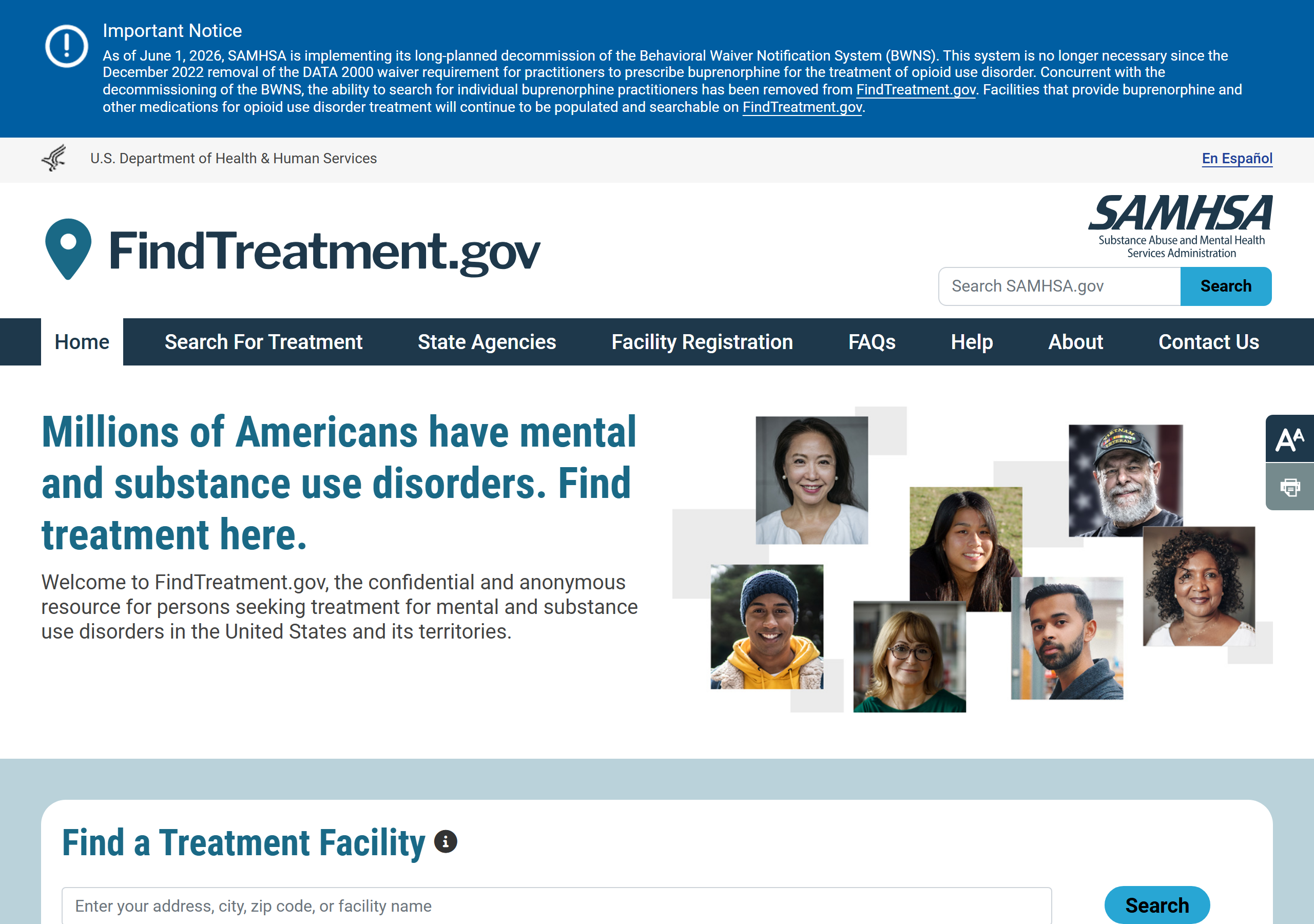
To find a private provider, start with your health plan’s online directory, search the federal locator FindTreatment.gov, or use identity-based directories that list therapists by language and background. To find public care, contact your county or community mental health office, look for a CCBHC, or ask your state Medicaid program. Find a provider walks through the search tools, What behavioral health services exist maps the kinds of care, and How mental health care works in the US gives the bigger picture. The National Institute of Mental Health also keeps a plain-language help page.
This varies by state
The names of public programs and the rules for who Medicaid covers change from state to state, and immigrant eligibility differs too. To check what is true where you live, search FindTreatment.gov, find a community health center at findahealthcenter.hrsa.gov, or contact your state Medicaid office. If a plan denies care you think it should cover, you have the right to appeal.
What a CCBHC must offer
A CCBHC is one of the strongest options in the public system, so it helps to know exactly what one must give you. Every CCBHC has to offer nine kinds of service, either in its own building or through a partner clinic: 24-hour crisis services; screening, assessment, and diagnosis; a treatment plan built around you; outpatient mental health and substance use care; basic physical health checks; case management to connect you to housing, benefits, and other help; psychiatric rehabilitation; peer and family support; and care for service members and veterans (New York State Office of Mental Health). Crisis help is there day and night, not only during office hours.
The most important rule for you is this: a CCBHC must serve anyone who asks for help with a mental health or substance use problem, no matter where you live or whether you can pay (New York State Office of Mental Health). Cost is never a reason to be turned away. These clinics are not rare. More than 500 CCBHCs and CCBHC grantees now operate across 46 states, plus Washington, DC, and Puerto Rico (National Council for Mental Wellbeing), so there may be one near you. You can search FindTreatment.gov to look.
How to check your insurance coverage in about five minutes
If you have insurance, one short phone call can tell you what mental health care will really cost you. Take out your insurance card and find the phone number on the back, usually next to the words “Member Services” or “Customer Service.” Have your member ID number from the front of the card ready. Then call and say: “I want to understand my mental health, or behavioral health, benefits.”
Ask these questions and write down the answers:
- Do I have coverage for outpatient mental health therapy?
- What is my copay for each therapy visit?
- Do I have a deductible I need to meet first, and how much of it is left this year?
- Do I need a referral or prior approval before I start?
- Do I have out-of-network benefits if I pick a therapist who does not take my plan?
- Can you help me find therapists near me who are in-network and speak my language?
You have the right to a free interpreter for this call. Ask, “Can I have an interpreter in [your language]?” and the plan should connect one. Keep the date, the name of the person you spoke with, and any reference number they give you, in case you need to check back later.
What mental health parity means for you
There is a federal law that works in your favor called the Mental Health Parity and Addiction Equity Act. “Parity” is a formal word that simply means “equal.” If a health plan covers mental health and substance use care, this law says it cannot make that care harder to get than regular medical care. In plain terms, your plan cannot charge a bigger copay for a therapy visit than for a normal doctor visit, cannot cap the number of therapy visits below what it allows for medical visits, and cannot make you jump through extra approval steps that it would not require for physical health care (KFF).
One limit is worth knowing: this law does not force every plan to cover mental health in the first place; it says only that if a plan covers it, the plan must treat it fairly (KFF). The good news is that most plans must cover it anyway. Mental health and substance use services are an essential health benefit on Marketplace plans, and Medicaid follows parity rules too. So if your plan denies mental health care, charges you far more for it than for medical care, or limits your visits in a way that feels unequal, you can push back and appeal the decision.
Your right to a cost estimate if you are uninsured or paying yourself
If you do not have insurance, or you have it but plan to pay on your own without using it, a federal rule called the No Surprises Act gives you a useful right. Before you start care, you can ask any provider for a Good Faith Estimate, a written paper that says how much your care is expected to cost (Consumer Financial Protection Bureau). You can use this simple sentence: “I am paying without insurance. Please give me a Good Faith Estimate of what this will cost.” You can ask for it even if you have not booked an appointment yet, and the provider must give it to you in writing, usually within three business days (Consumer Financial Protection Bureau).
This estimate helps you compare prices and avoid a shock later. It also gives you a backup. If your final bill ends up at least $400 more than the estimate, you can challenge the bill through a federal dispute process, as long as you start within 120 days of getting the bill (Consumer Financial Protection Bureau). Keep both the estimate and the bill so you can compare them.
Ask about the wait
Both private and public care can have a waitlist, but they often work differently, so it is worth asking directly. One popular private therapist may be full for weeks while another with the same skills has openings next week. A public clinic may be busy, but it must still help you right away in a crisis. When you call any office, ask: “How long is the wait for a first appointment?” and “Can you put me on a cancellation list so I can come in sooner if a spot opens?” If the wait feels too long and you are struggling now, say so. Ask, “What can I do while I wait if things get worse?” A good clinic can point you to shorter-term support.
You never have to wait in an emergency. Call or text 988 any time, day or night.
Sources
- Centers for Medicare & Medicaid Services (CMS). Behavioral Health Services (Medicaid). https://www.medicaid.gov/medicaid/benefits/behavioral-health-services.
- Centers for Medicare & Medicaid Services (CMS). Parity (Mental Health Parity and Addiction Equity Act). https://www.medicaid.gov/medicaid/benefits/behavioral-health-services/parity.
- Consumer Financial Protection Bureau (CFPB). What Is a “Surprise Medical Bill” and What Should I Know About the No Surprises Act? https://www.consumerfinance.gov/ask-cfpb/what-is-a-surprise-medical-bill-and-what-should-i-know-about-the-no-surprises-act-en-2123/.
- HealthCare.gov. How to Appeal an Insurance Company Decision. https://www.healthcare.gov/appeal-insurance-company-decision/.
- HealthCare.gov. Mental Health and Substance Abuse Coverage. https://www.healthcare.gov/coverage/mental-health-substance-abuse-coverage/.
- Health Resources and Services Administration (HRSA). Find a Health Center. https://findahealthcenter.hrsa.gov/.
- KFF. Mental Health Parity at a Crossroads. https://www.kff.org/mental-health/mental-health-parity-at-a-crossroads/.
- National Council for Mental Wellbeing. CCBHC Locator: List of CCBHCs by State. https://www.thenationalcouncil.org/program/ccbhc-success-center/ccbhc-locator/.
- National Institute of Mental Health (NIMH). Help for Mental Illnesses. https://www.nimh.nih.gov/health/find-help.
- New York State Office of Mental Health (OMH). Certified Community Behavioral Health Clinics (CCBHC). https://omh.ny.gov/omhweb/bho/ccbhc.html.
- Rural Health Information Hub. Federally Qualified Health Centers (FQHCs) and the Health Center Program Overview. https://www.ruralhealthinfo.org/topics/federally-qualified-health-centers.
- Substance Abuse and Mental Health Services Administration (SAMHSA). Certified Community Behavioral Health Clinics (CCBHCs). https://www.samhsa.gov/communities/certified-community-behavioral-health-clinics.
- Substance Abuse and Mental Health Services Administration (SAMHSA). FindTreatment.gov. https://findtreatment.gov/.
LINC is a research prototype, not a medical or legal service. Translation can be wrong; you have the right to a free, qualified interpreter. For anything high-stakes, do it with a community health worker or someone you trust. In a crisis, call or text 988, or 911 for immediate danger.