FMLA stands for the Family and Medical Leave Act. It is a federal law that allows eligible workers to take up to 12 weeks off per year for a serious health condition, including a mental health condition, without losing their job. To qualify, your employer must have at least 50 employees and you must have worked there for at least 12 months.
Sometimes the hardest part of getting care is not finding a provider but actually getting to the visit. A ride you cannot afford, no one to watch the children, a shift you cannot leave, a bill you are afraid of: these everyday barriers stop many people before they ever sit down with a counselor. Each one has practical solutions. Here is how to work around the most common ones.
- With Medicaid, you may get free rides to appointments (NEMT); call the number on your card a few days ahead.
- FMLA can give eligible workers up to 12 weeks of job-protected leave for a mental health condition.
- A phone or video visit removes the ride and much of the childcare problem; dial 2-1-1 for other local help.
Getting there: free rides and telehealth
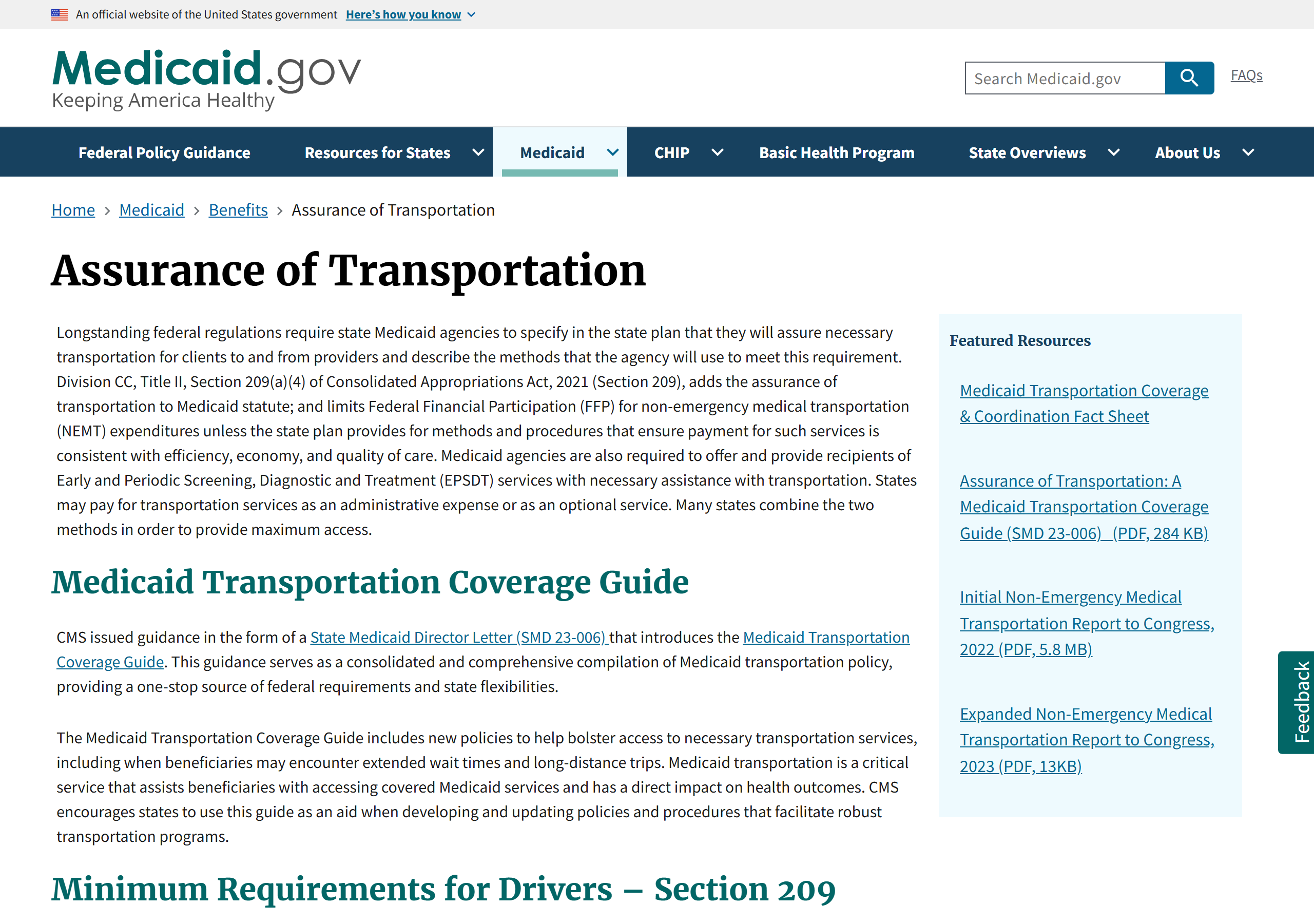
If you have Medicaid, you may have a free ride to your appointments. Medicaid covers non-emergency medical transportation (NEMT), which means rides to and from covered care for people who have no other way to get there. Federal rules require state Medicaid programs to assure necessary transportation to and from providers (Medicaid.gov). To use it, call the number on your Medicaid card or your plan and say: “I need a ride to a covered medical appointment. How do I arrange Medicaid transportation?” Ask how far ahead you need to book, which is usually a few days.
NEMT can take different forms depending on your state and what you need. It may be a bus pass, a ride in a taxi or van, or money paid back for gas when a friend or family member drives you in their own car (MACPAC). So it is worth asking two more questions when you call: “What kinds of rides can I get?” and “Can you pay a family member back for driving me?” If you use a wheelchair or need help getting in and out of a vehicle, say so, because there are rides set up for that too.
"I need a ride to a covered medical appointment. How do I arrange Medicaid transportation?"
"What kinds of rides can I get, and can you pay a family member back for driving me?"
If you do not have Medicaid, dial 2-1-1 or visit 211.org for help finding local rides, bus passes, and volunteer driver programs in your area. And remember that many mental health visits can be done by phone or video, with no travel at all. See telehealth: care by phone or video.
When you have children to care for
Childcare is a real barrier, and it is fine to raise it. When you book, ask the clinic directly: “Do you have a waiting area where my child can stay, or can I bring my child to the visit?” Some clinics are set up to be child-friendly. 2-1-1 can also point you to low-cost or free childcare resources near you. And here too, a telehealth visit from home can let you keep an eye on your children while you talk with a counselor.
Taking time off work
You may have a legal right to take time off. The Family and Medical Leave Act (FMLA) gives eligible employees up to 12 weeks of job-protected, unpaid leave for a serious health condition, and the U.S. Department of Labor confirms this can include mental health conditions (DOL Fact Sheet #28O). Eligibility depends on your employer’s size and how long you have worked there, so it does not cover everyone.
To qualify, you generally must have worked for your employer for at least 12 months, worked at least 1,250 hours in the year before your leave, and work at a place where the employer has at least 50 employees within 75 miles (DOL Fact Sheet #28). While you are on FMLA leave, your job is protected and your health insurance keeps going on the same terms. You do not have to take all 12 weeks at once. You can take leave in smaller pieces, called intermittent leave, such as a few hours for a therapy appointment or a day now and then when you are unwell (DOL FMLA FAQ). When you know about a need ahead of time, tell your employer at least 30 days before; when it is sudden, tell them as soon as you can. Your employer may ask for a note from your provider (a medical certification), and you do not have to reveal every private detail.
- Worked for your employer for at least 12 months.
- Worked at least 1,250 hours in the year before your leave.
- Your employer has at least 50 employees within 75 miles.
If you would rather not take leave, ask the clinic for an early-morning, evening, or telehealth appointment that fits around your shift. For more on leave and workplace benefits, see workplace and employer mental health benefits.
When cost is the barrier
You can get care even with little money or no insurance. Community health centers serve everyone, insured or not, and charge on a sliding scale based on your income; find one at findahealthcenter.hrsa.gov. Medicaid covers mental health care for those who qualify, and free local helpers can walk you through applying at HealthCare.gov. With any provider, it is normal to ask, “Do you have a sliding scale, financial assistance, or a payment plan?” Many do. For more, see understand cost and insurance and free and low-cost care: community health centers.
Community health centers serve everyone, insured or not, and charge on a sliding scale based on your income. With any provider, it is normal to ask about a sliding scale, financial assistance, or a payment plan.
Getting ready for a telehealth visit
A phone or video visit removes the ride, the parking, and much of the childcare problem, so it is worth getting ready for. You do not need anything fancy. A phone, tablet, or computer with a working camera and a steady internet or phone connection is usually enough (Telehealth.HHS.gov). A few simple steps make it go smoothly:
- Find a quiet, private spot where you can speak openly, even if that is your car or a closed room.
- Test your device ahead of time and close other apps so your connection stays strong. For a video visit, connect about 15 minutes early in case you need to fix something (Telehealth.HHS.gov).
- Ask for an interpreter when you book, just as you would for an in-person visit. You have the right to a free, qualified interpreter, and they can join a phone or video visit.
- Have your questions and medicine list nearby, and a pen and paper to write down what the provider says.
If the technology feels hard, that is normal. Ask the clinic, “Can someone help me set up the video before my visit?” Many clinics will. For more, see telehealth: care by phone or video.
What varies by state, and how to check
NEMT rules, what Medicaid covers, and which local services exist vary a lot from state to state. To check your own options, call the number on your Medicaid card, reach your state Medicaid agency through Medicaid.gov, or dial 2-1-1.
You do not have to plan this alone
The chatbot can help you think through which of these options fit your situation and what to say when you call. A community health worker can go further: they can help you book the ride, find childcare, ask your employer about leave, or apply for low-cost coverage, step by step.
Sources
- HealthCare.gov. Get help applying & more. https://www.healthcare.gov/find-assistance/.
- Health Resources and Services Administration (HRSA). Find a Health Center. https://findahealthcenter.hrsa.gov/.
- Medicaid. Assurance of Transportation. https://www.medicaid.gov/medicaid/benefits/assurance-of-transportation.
- Medicaid. Where Can People Get Help With Medicaid & CHIP? https://www.medicaid.gov/about-us/where-can-people-get-help-medicaid-chip.
- Medicaid and CHIP Payment and Access Commission (MACPAC). Non-emergency medical transportation. https://www.macpac.gov/subtopic/non-emergency-medical-transportation/.
- Telehealth.HHS.gov. For patients. https://telehealth.hhs.gov/patients.
- Telehealth.HHS.gov. What do I need to use telehealth? https://telehealth.hhs.gov/patients/what-do-i-need-use-telehealth.
- Telehealth.HHS.gov. What should I know before my telehealth visit? https://telehealth.hhs.gov/patients/what-should-i-know-before-my-telehealth-visit.
- U.S. Department of Labor. Fact Sheet #28: The Family and Medical Leave Act. https://www.dol.gov/agencies/whd/fact-sheets/28-fmla.
- U.S. Department of Labor. Fact Sheet #28O: Mental Health Conditions and the FMLA. https://www.dol.gov/agencies/whd/fact-sheets/28o-mental-health.
- U.S. Department of Labor. FMLA Frequently Asked Questions. https://www.dol.gov/agencies/whd/fmla/faq.
- United Way Worldwide. 211 (not a government service). https://www.211.org/.
LINC is a research prototype, not a medical or legal service. Translation can be wrong; you have the right to a free, qualified interpreter. For anything high-stakes, do it with a community health worker or someone you trust. In a crisis, call or text 988, or 911 for immediate danger.