An 'in-network' provider is a doctor or therapist who has an agreement with your health insurance plan. When you see an in-network provider, your plan pays most of the cost and you pay a smaller share, such as a copay. Seeing someone 'out-of-network' usually costs you more because your plan covers a smaller portion.
You do not have to find care alone, and you do not have to speak English well to get good care. Working with a provider who speaks your language, or with a trained professional interpreter, measurably improves your care (Karliner et al., 2007; Bauer & Alegría, 2010). This guide gives you practical, repeatable steps to find that provider, and the exact questions to ask so nothing surprises you later.
1. Decide what kind of help you want
First, decide the kind of help you are looking for: talk therapy or counseling, a psychiatrist for medication, or a community program. If you are not sure where to start, your primary care provider (your regular doctor) can begin simple treatment or refer you, and a community health worker or navigator can help you sort it out. LINC’s guide on the types of mental health providers explains who does what.
If you need help right now, you do not have to wait for an appointment: call or text 988, the Suicide and Crisis Lifeline, which is free, confidential, and has interpreters in many languages. To be connected to local services near you, you can also dial 211.
2. Choose how language will work
You have two good options, and both give good care. You can look for a provider who speaks your language directly, or you can see any provider who works with a qualified professional interpreter. A provider does not need to share your language as long as a trained interpreter joins the visit.
A qualified interpreter can join in person, by phone, or by video, so even a less common language is usually covered within minutes by a phone or video service. Ask for one when you call.
You should not have to bring your own interpreter, and you should not have to rely on your child, a family member, or a friend. Untrained interpreters, including relatives, make far more errors that change the meaning of medical information than trained professionals do (Flores et al., 2012), and leaning on family can cost you your privacy. In any program that receives federal funding, you have the right to a free interpreter under federal civil-rights law (U.S. HHS Office for Civil Rights). It is never billed to you.
3. Where to look
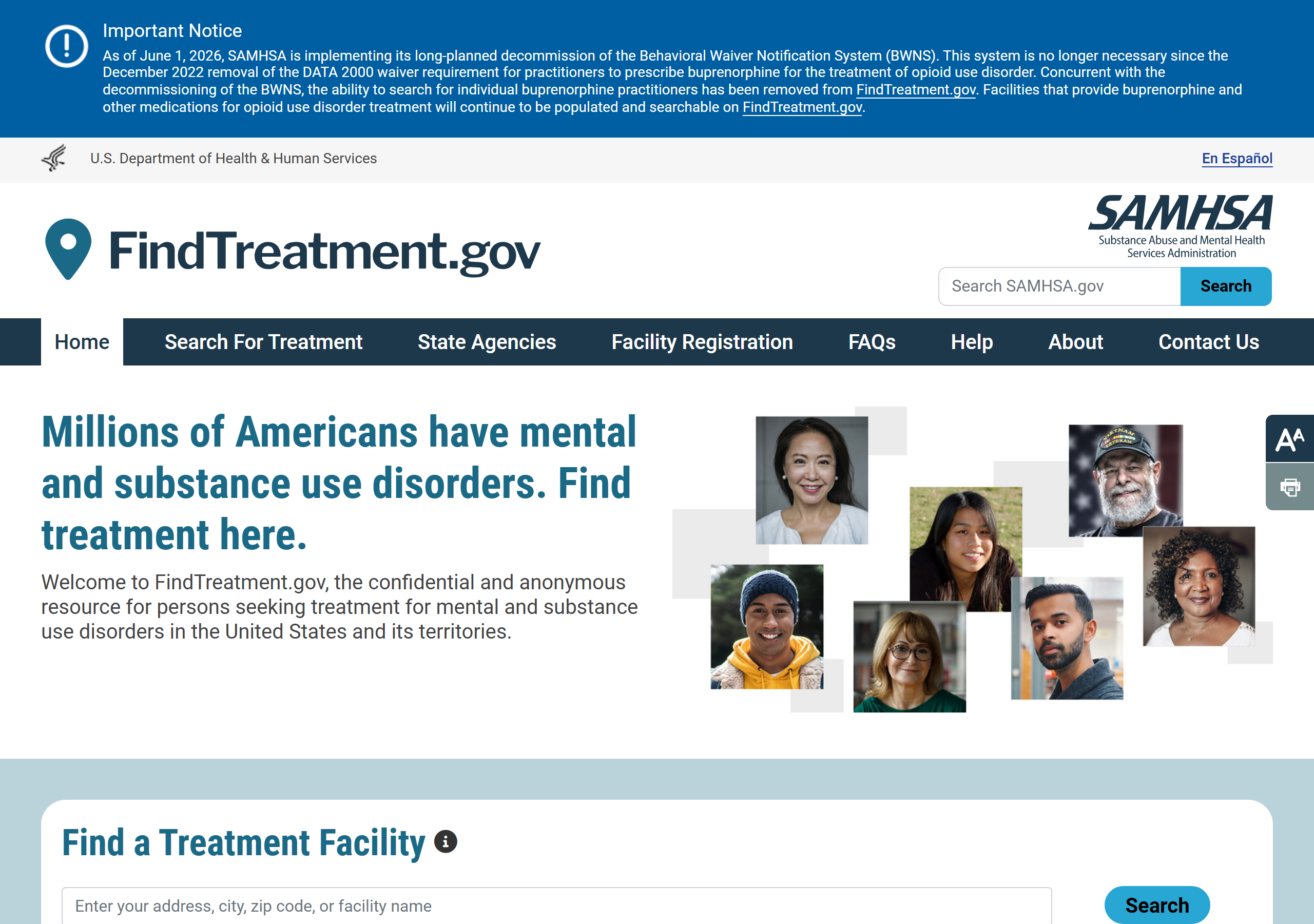
Start with FindTreatment.gov, the free, confidential, and anonymous locator from SAMHSA. You can search by location and filter for the services and languages you need. FindTreatment.gov is the federal locator mainly for public and community programs; to find a private-practice therapist, use your insurance plan’s directory or private listings instead. Private vs. public mental health care explains the difference.
No directory is complete. A clinic that takes your insurance or speaks your language can be missing from a search, because providers are not always required to list themselves. If a search comes up short, call your insurance plan, dial 211, or ask a community health worker to check for you. And whether or not a listing says so, any provider that takes Medicaid or Medicare must arrange a free interpreter for you.
Other strong places to search:
- Your insurance plan’s provider directory. Most plans let you filter by language spoken and by “accepting new patients.” If the website is hard to use, call the number on the back of your insurance card and ask them to find someone who speaks your language.
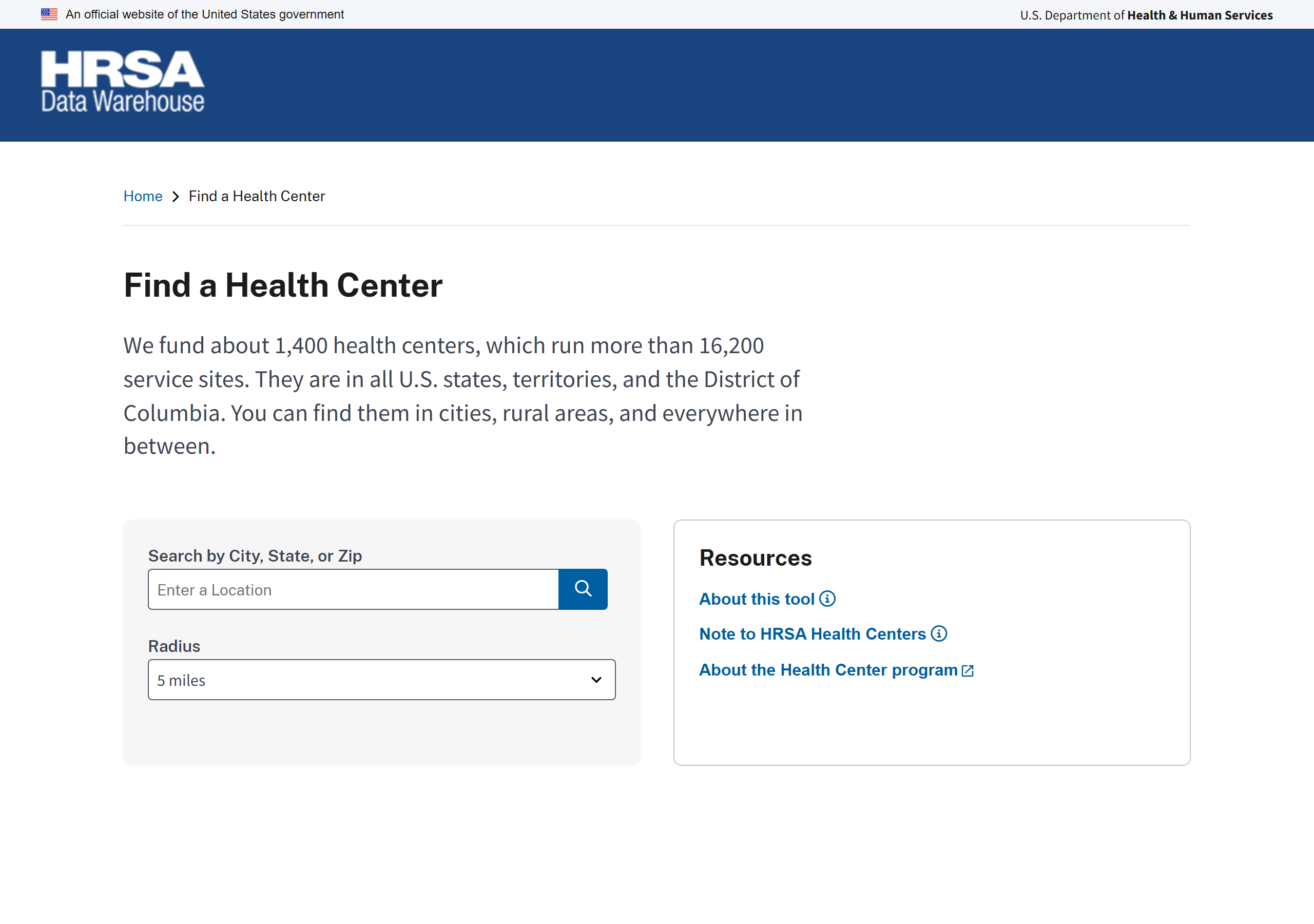
- Community health centers (FQHCs). These centers provide interpreters, serve people regardless of insurance or ability to pay, and charge on a sliding scale based on income. Find one near you with HRSA’s Find a Health Center tool.
- Dial 211. The free 211 service (call, or visit 211.org) connects you to local mental health programs, many of which serve specific language communities.
- Community and faith organizations that serve your community. They often keep informal lists of trusted providers who share your language.
- NAMI, the National Alliance on Mental Illness. Its HelpLine and local affiliates (nami.org) can point you toward low-cost and language-specific options.
- University training clinics and county community mental health. These often offer lower-cost care with interpreters, and can be a good route if private therapists are full or expensive.
4. Check cost before you book
What a visit costs, and what your insurance covers, varies by state and by plan. Before you book, ask whether the provider takes your insurance, whether they offer a sliding scale, and, if you have no insurance, what the visit will cost. You have the right to ask the price up front. Community health centers set fees by income and family size, so the same visit can cost different amounts for different people. If your income is low, you may qualify for Medicaid, which covers mental health care. To check your own situation, contact your state Medicaid office, or find a local health center through findahealthcenter.hrsa.gov. LINC’s guide on understanding cost and insurance walks through this in plain language.
5. Call ahead and confirm
Before your first visit, one short phone call saves you a wasted trip. Confirm all of this:
- Language. “Do you have someone who speaks ___, or will you provide an interpreter at no cost to me?”
- Cost. “Do you accept ___ insurance?” or “Do you offer a sliding scale?”
- Availability. “Are you accepting new patients, and when is the earliest appointment?”
- Format. Whether the visit is in person or by video, and what to bring, such as ID, your insurance card, and a list of any medications.
LINC has separate guides on your right to an interpreter and on booking your first appointment.
6. Ask Chatbot or a person to help
You can ask the chatbot to help you plan your search and write out your questions in English before you call. For anything important, do it with a community health worker, a navigator, or someone you trust; a person can catch what a chatbot cannot.
Your rights, in short
- The interpreter is free. You are never billed for it, and you do not have to bring your own.
- You can decline to have a child or family member interpret for you.
- Care with a trained interpreter is as effective as care in your own language. You are not a burden for asking.
Sources
- Bauer, A. M., & Alegría, M. (2010). Impact of patient language proficiency and interpreter service use on the quality of psychiatric care: A systematic review. Psychiatric Services, 61(8), 765–773. https://doi.org/10.1176/ps.2010.61.8.765
- Flores, G., Abreu, M., Barone, C. P., Bachur, R., & Lin, H. (2012). Errors of medical interpretation and their potential clinical consequences: A comparison of professional versus ad hoc versus no interpreters. Annals of Emergency Medicine, 60(5), 545–553. https://doi.org/10.1016/j.annemergmed.2012.01.025
- Karliner, L. S., Jacobs, E. A., Chen, A. H., & Mutha, S. (2007). Do professional interpreters improve clinical care for patients with limited English proficiency? A systematic review of the literature. Health Services Research, 42(2), 727–754. https://doi.org/10.1111/j.1475-6773.2006.00629.x
- National Alliance on Mental Illness (NAMI). NAMI HelpLine. https://www.nami.org/help
- U.S. Department of Health and Human Services, Office for Civil Rights. Limited English Proficiency (LEP). https://www.hhs.gov/civil-rights/for-individuals/special-topics/limited-english-proficiency/index.html
- U.S. Health Resources and Services Administration (HRSA). Find a Health Center. https://findahealthcenter.hrsa.gov/
- U.S. Substance Abuse and Mental Health Services Administration (SAMHSA). FindTreatment.gov. https://findtreatment.gov/
- United Way. 211. https://www.211.org/
LINC is a research prototype, not a medical or legal service. Translation can be wrong; you have the right to a free, qualified interpreter. For anything high-stakes, do it with a community health worker or someone you trust. In a crisis, call or text 988, or 911 for immediate danger.