Costs, coverage, and eligibility vary by plan and by state, and the rules change. Use this as a general guide, and confirm the details with your insurance plan, the clinic, or a community health worker before you rely on them.
An 'FQHC' (Federally Qualified Health Center) is a clinic that receives federal funding specifically to serve everyone, even people who cannot pay or do not have immigration papers. The fee is based on what you can afford, so two people getting the same service may pay very different amounts.
If money or insurance is the barrier, you still have ways to get mental health care. This guide explains the most reliable low-cost door: community health centers.
- Community health centers (FQHCs) serve everyone, including uninsured and undocumented people, and charge on a sliding scale by income.
- No one is turned away for being unable to pay, and interpreters are free.
- Find one at findahealthcenter.hrsa.gov, or call SAMHSA's National Helpline at 1-800-662-4357 for referrals.
Community health centers serve everyone
Community health centers, also called Federally Qualified Health Centers or FQHCs, provide primary care along with behavioral and mental health services. They serve everyone, including people who are uninsured and people who are undocumented, and they charge on a sliding fee scale based on your income and family size (HRSA). You are charged what you can afford, and no one is turned away for being unable to pay (HRSA).
Because the fee depends on income and family size, the same service can cost different amounts for different people, and the discount levels are set locally. As a general rule, if your household income is at or below the federal poverty guideline you get the largest discount, and people who earn up to twice that amount still get a partial discount (HRSA). At the lowest income level, many centers charge only a small, flat nominal fee, a token amount meant to be affordable from your side, not the real cost of the visit; above twice the poverty guideline the sliding discount stops, and no patient can be turned away for being unable to pay (HRSA). When you call, ask the center how their sliding fee scale works for your household. Setting your fee is about your income and family size, so a center may ask for proof of income such as a recent pay stub, but it does not require immigration papers.
Health centers are built to be a one-stop place. Along with primary care and mental or behavioral health counseling, many offer dental care, a pharmacy, and enabling services that clear away the barriers around care, such as case management, help with transportation, health education, and free interpreting (Rural Health Information Hub). They serve a very large number of people. In 2024, health centers cared for more than 32 million patients at over 1,350 organizations in every state and territory; nearly one in five had no insurance, and more than one in four had limited English, so being seen without insurance or in another language is routine for them (HRSA). A related clinic called a Health Center Program “look-alike” follows the same rules and the same sliding scale even though it does not get the federal grant, so it counts too when you are searching (Rural Health Information Hub).
They must help you in your language
Community health centers are required to offer language assistance, and federal civil rights law requires health programs that receive federal funding to take reasonable steps to give you meaningful access in your language (HHS Office for Civil Rights). When you call to make an appointment, ask for an interpreter in your language at no cost to you, and say which language you need so they can arrange it before you arrive. You should not have to bring your own interpreter or rely on a child to interpret. LINC’s guide on your right to a free interpreter explains this right in detail.
How to find one near you
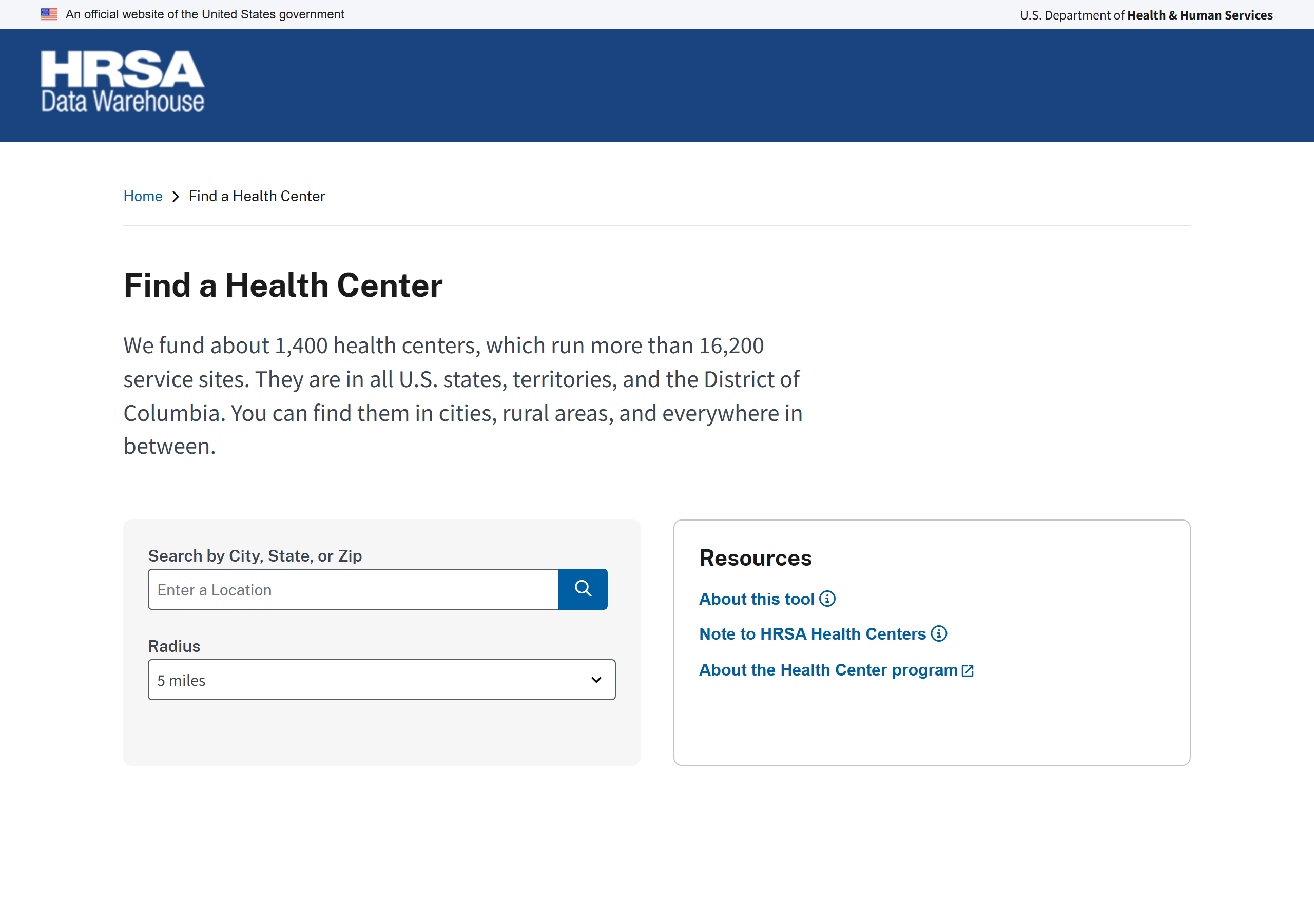
Use HRSA’s Find a Health Center tool. Enter your ZIP code or address, and it lists the centers closest to you with their contact information.
A free phone line for referrals
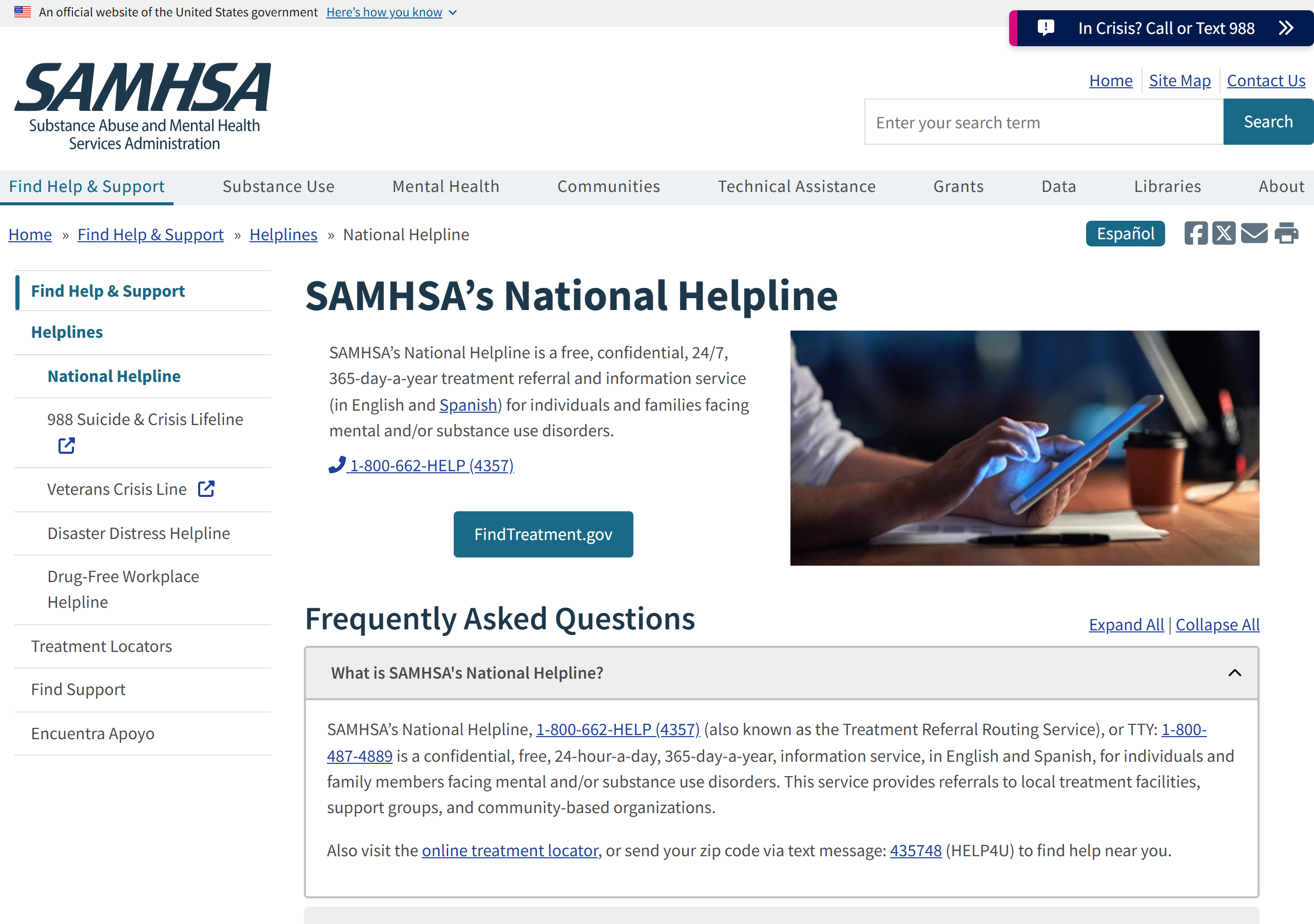
The SAMHSA National Helpline is free, confidential, and open 24 hours a day, 7 days a week, every day of the year, in English and Spanish. Call 1-800-662-HELP (1-800-662-4357) for referrals to local treatment and support groups. You do not need insurance to call, and the line does not ask for your immigration status. You can also search on your own at SAMHSA’s FindTreatment.gov.
Questions to ask every provider
Whenever you contact a provider, ask:
- “Do you take my insurance?”
- “Do you have a sliding scale or financial assistance?”
Many hospitals and clinics also have financial counselors and charity-care programs that can lower or forgive a bill. A community health worker can help you apply.
What varies by state, and how to check
Medicaid eligibility, sliding-fee discount levels, and which services are covered vary by state. To check your own options, contact your state Medicaid office, or find a local health center through findahealthcenter.hrsa.gov. Children often qualify for free or low-cost coverage even when adults in the same family do not, and USA.gov explains how to apply for Medicaid and CHIP. LINC’s guide on what care costs and how insurance works walks through it step by step.
What to bring to your first visit
You do not need much to be seen, and none of the following is required, but bringing what you have makes the visit smoother.
- A photo ID if you have one. You do not need a state ID or immigration papers.
- Proof of income for the sliding scale if you have it, such as a recent pay stub. If you have none, ask what else the center accepts.
- Your insurance or Medicaid card, if you have one.
- A list of any medicines you take, or the bottles themselves.
- The name and dose of anything a past provider gave you for your mental health.
Ask for your interpreter when you book, not only when you arrive, so it is ready in time. Many centers have counseling and behavioral health on site, so you can ask to be connected to mental health care at the same visit.
If you need help sooner
You do not have to wait alone for an appointment. If you are in emotional distress or worried about your safety, call or text 988 to reach the free, confidential 988 Suicide and Crisis Lifeline, which offers interpreters in more than 240 languages. For help with food, housing, utilities, or finding local low-cost care, dial 2-1-1, a free service offered in many languages.
If you are in emotional distress or worried about your safety, call or text 988 to reach the free, confidential Suicide and Crisis Lifeline, with interpreters in more than 240 languages. For food, housing, utilities, or local low-cost care, dial 2-1-1.
Does using a health center hurt my immigration case?
Many people delay care because they fear it could affect a green card or a visa. For everyday health care, the news is reassuring. The government’s public charge test, used in some immigration cases, looks only at whether a person is likely to depend on cash welfare for basic income, or on long-term care in an institution paid for by the government. Ordinary health care is not part of it. Getting Medicaid (except long-term institutional care), CHIP, emergency care, or care at a community health center is not counted against you under the current rule (KFF). A health center’s sliding scale also lets you pay for care directly, without enrolling in any public program.
Because immigration rules can change and every case is different, LINC cannot tell you how a benefit affects your case, and this is not legal advice. If you have a pending case, a licensed immigration attorney or a DOJ-accredited representative can give you an answer for your situation.
What to expect when you call and visit
You do not need perfect English or a stack of documents to start. Here is what usually happens.
When you call, ask for the interpreter both when you book and when you arrive, so the center has time to arrange it. Here is one way to say it.
"I would like to make an appointment. I do not have insurance. Do you use a sliding fee scale, and what should I bring to set my fee?"
"Please have an interpreter in [your language] for my visit."
If you have no pay stub, you can still be seen. Ask what else the center accepts. Many take an employer letter, a benefits letter, bank records, or a short written statement of your income, and some can set your fee based on what you tell them. If you have no income, say so; that usually means the biggest discount or only a small nominal fee.
Wait times vary. Ask, “What is your first available appointment, and do you have a cancellation or walk-in list?” At a first behavioral health visit, someone will usually ask how you have been feeling, how you sleep, and what you would like help with. You can bring a list of your medicines, or the bottles, and the name of anything a past provider gave you. If waiting feels hard, call or text 988 any time for free, confidential support in your language.
Sources
- 211 (United Way). Get connected. Get help. https://www.211.org/
- Health Resources and Services Administration. Am I eligible? https://www.hrsa.gov/get-health-care/affordable/eligibility
- Health Resources and Services Administration. Find a Health Center. https://findahealthcenter.hrsa.gov/
- Health Resources and Services Administration. National Health Center Program Uniform Data System (UDS) awardee data. https://data.hrsa.gov/tools/data-reporting/program-data/national
- Health Resources and Services Administration, Bureau of Primary Health Care. About the Health Center Program. https://bphc.hrsa.gov/about-health-center-program
- Health Resources and Services Administration, Bureau of Primary Health Care. Chapter 9: Sliding fee discount program. Health Center Program Compliance Manual. https://bphc.hrsa.gov/compliance/compliance-manual/chapter9
- HHS Office for Civil Rights. Section 1557: Ensuring meaningful access for individuals with limited English proficiency. https://www.hhs.gov/civil-rights/for-individuals/section-1557/fs-limited-english-proficiency/index.html
- KFF. Potential “chilling effects” of public charge and other immigration policies on Medicaid and CHIP enrollment. https://www.kff.org/medicaid/potential-chilling-effects-of-public-charge-and-other-immigration-policies-on-medicaid-and-chip-enrollment/
- Rural Health Information Hub. Federally qualified health centers (FQHCs) and the Health Center Program. https://www.ruralhealthinfo.org/topics/federally-qualified-health-centers
- Substance Abuse and Mental Health Services Administration. 988 Suicide & Crisis Lifeline. https://www.samhsa.gov/mental-health/988
- Substance Abuse and Mental Health Services Administration. FindTreatment.gov. https://findtreatment.gov/
- Substance Abuse and Mental Health Services Administration. National Helpline. https://www.samhsa.gov/find-help/helplines/national-helpline
- USA.gov. How to apply for Medicaid and CHIP. https://www.usa.gov/medicaid-chip-insurance
LINC is a research prototype, not a medical or legal service. Translation can be wrong; you have the right to a free, qualified interpreter. For anything high-stakes, do it with a community health worker or someone you trust. In a crisis, call or text 988, or 911 for immediate danger.