A 'CCBHC' (Certified Community Behavioral Health Clinic) is a type of clinic that must accept anyone who asks for help, no matter their income, insurance, or where they live, and it must offer crisis services every day and night. These clinics provide counseling, medication, peer support, and care coordination all in one place.
In the United States, “behavioral health” is an umbrella term. It covers both mental health (such as depression, anxiety, trauma, or thoughts of suicide) and substance use (problems with alcohol or drugs). The same system treats both, often in the same clinic. This guide maps the main kinds of behavioral health care, from a light check-in to intensive crisis help. You do not have to start at the top; most people begin small and move to more intensive care only if they need it.
- "Behavioral health" covers both mental health and substance use, often in the same clinic.
- Reliable starting points: your primary care provider, a community mental health center, or a CCBHC, which must serve anyone regardless of ability to pay.
- In a crisis, call or text 988, or call SAMHSA's National Helpline at 1-800-662-4357. What is near you varies by state, so search FindTreatment.gov by ZIP code.
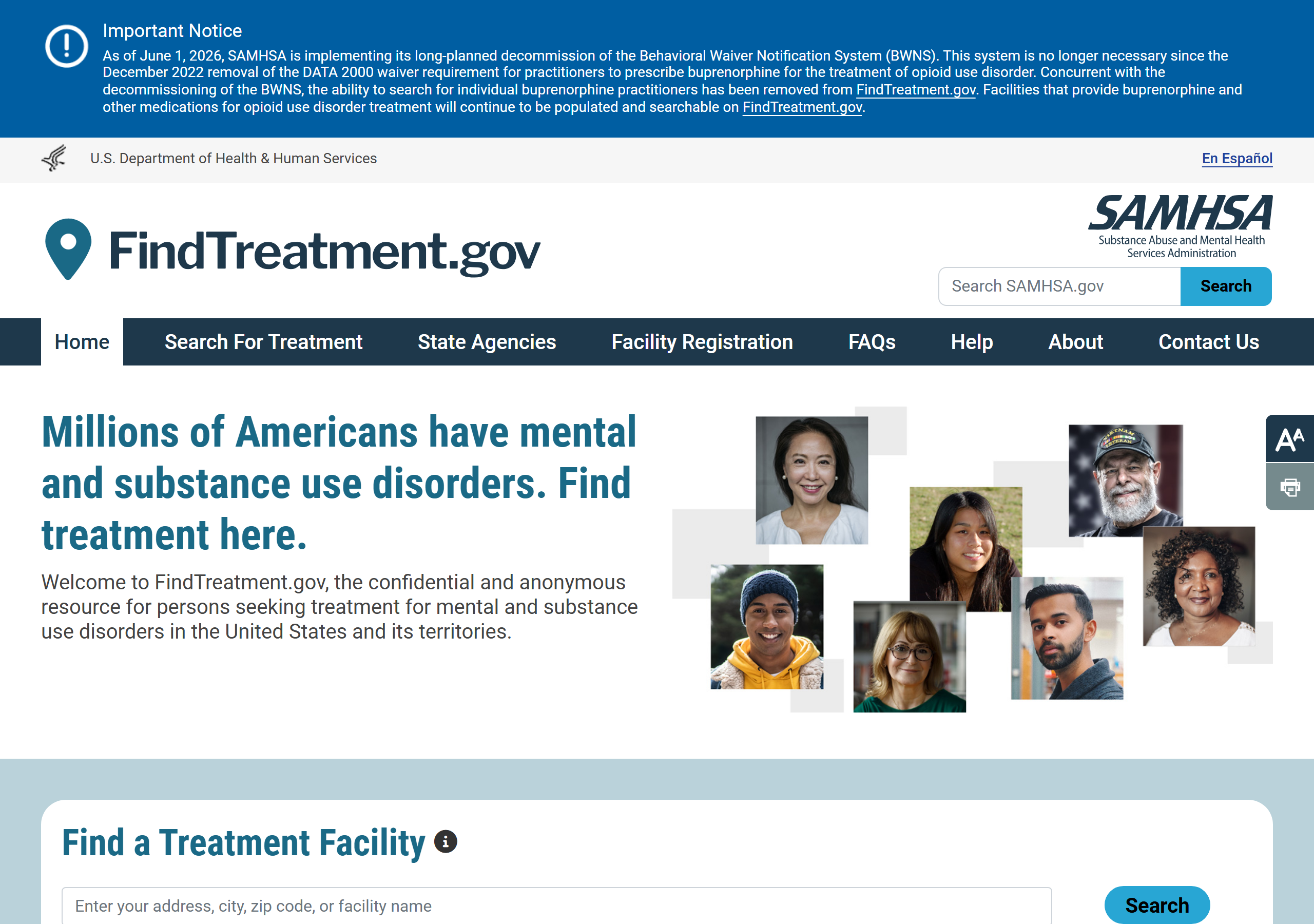
FindTreatment.gov is the federal locator for both mental health and substance use treatment, run by SAMHSA. SAMHSA’s Find Help page and the National Institute of Mental Health also keep plain-language pages on where to begin.
Everyday and outpatient care
- Primary care. What it is: your regular doctor or nurse can screen you for depression, anxiety, and drinking, start basic treatment, and refer you onward. What happens: the visit often begins with a few short questions about your mood, sleep, and worries; the provider may start a basic medication or hand you a referral. How it is paid: it counts as a normal medical visit, so most insurance covers it, and community health centers charge on a sliding scale. Who it is for: anyone. This is a normal, low-pressure first door. Example: you tell your doctor you have not slept well in months, and she screens you, starts a medication, and refers you to a counselor.
- Outpatient therapy or counseling. What it is: regular visits, often weekly, with a therapist, counselor, social worker, or psychologist. What happens: a session usually runs about 45 to 50 minutes; you talk, the provider listens, and together you build skills to handle troubling thoughts, feelings, and behaviors. How it is paid: covered by most insurance and Medicaid; clinics that use a sliding fee scale serve people with low income or no insurance. How to access: ask a primary care provider for a referral, or search a directory yourself. Who it is for: most people who want help with feelings, stress, trauma, or relationships. This is the most common form of care. Example: you meet a counselor every Tuesday for a few months to work through grief after a loss.
- Psychiatry and medication management. What it is: a psychiatrist or other prescriber checks whether medication could help and adjusts it over time. What happens: the first visit is a longer evaluation; later visits are short check-ins to see how the medicine is working. What to expect: many medications, such as antidepressants, take about 4 to 8 weeks to reach full effect, and sleep, appetite, and energy often improve before mood does; you can and should talk with the prescriber about side effects and what to expect, per NIMH. Do not stop a medication on your own; a prescriber can lower the dose safely. Who it is for: people whose symptoms may respond to medication, often alongside therapy.
Clinics that serve everyone
- Community mental health centers (CMHCs) and Certified Community Behavioral Health Clinics (CCBHCs). What it is: clinics that provide a wide range of services in one place. CCBHCs must serve anyone who asks, regardless of age, ability to pay, or where they live, and must offer crisis care 24 hours a day, every day, including mobile crisis teams and crisis stabilization. By federal rule they must provide nine core services under one roof: crisis services day and night; screening, assessment, and diagnosis; a treatment plan built around you; outpatient mental health and substance use care; basic physical health screening; case management to connect you to other help; rehabilitation services to rebuild daily skills; peer and family support; and care tailored for service members and veterans. Because it is all in one place, you do not have to assemble help from many separate offices. What happens: staff do an intake, ask what you need, and connect you to the right services inside the same clinic. How it is paid: cost is never a reason to be turned away; if you have no insurance you are charged based on what you can afford. Who it is for: anyone, especially people without insurance or who need several kinds of help at once. Example: you walk in with no insurance and leave with a counseling appointment, a medication evaluation, and help applying for coverage.
More intensive care
- Intensive outpatient (IOP) and partial hospitalization (PHP). What it is: structured programs of several hours a day, several days a week, while you still live at home. What happens: most days mix group therapy, individual sessions, and skill-building; PHP is the more intensive of the two, often close to a full day. How it is paid: usually billed to insurance or Medicaid like other treatment. Who it is for: people who need more than weekly therapy but do not need to stay overnight, including people leaving a hospital who need a gentler step down. Example: after a hard few weeks you attend a morning program three days a week for a month, then return to weekly therapy.
- Inpatient or hospital care. What it is: a short stay in a hospital for safety, stabilization, and close monitoring. What happens: a team keeps you safe, adjusts medication, and plans your next steps; most stays are short, from a few days to a couple of weeks. What to expect: most stays are voluntary, and the goal is to stabilize you and connect you to ongoing care before you leave. Who it is for: people in acute crisis or at risk of harm, until they are stable.
Crisis help, any time
Call or text 988, the Suicide and Crisis Lifeline: free and confidential, any time, day or night. Press 2 for a Spanish counselor, or stay on the line for interpretation in more than 240 languages. You do not need to be suicidal to call.
- 988 Suicide and Crisis Lifeline. What it is: free, confidential help by call, text, or chat, any time, day or night. What happens on the call: you first hear a short menu, where you can press 1 for the Veterans Crisis Line or 2 for Spanish; then a trained counselor greets you, asks whether you are safe, listens, and shares resources that may help. How to reach it in your language and situation, per the SAMHSA 988 FAQs: press 2 for a Spanish counselor, or text 988 and type “Ayuda”; use interpretation in more than 240 languages by staying on the line; if you are Deaf or hard of hearing, dial 988 from a videophone for an American Sign Language counselor, or reach it through relay by dialing 711 then 988. You do not need to be suicidal to call. Who it is for: anyone in emotional distress or thinking about suicide, and people worried about someone else. SAMHSA explains 988.
- Mobile crisis teams and crisis stabilization. What it is: trained responders who can come to you, plus short-term places to stay calm and safe instead of an emergency room. What happens: a mobile team meets you where you are, helps calm the moment, and connects you to follow-up care; a stabilization site offers a quiet, supervised place for a short stay. Who it is for: people in crisis who need in-person help. Availability varies a lot by area (see below).
Substance use treatment
- Treatment for alcohol and drug use. What it is: counseling, outpatient or residential programs, and medications for opioid and alcohol use disorder (often called MAT or MOUD). For opioids these include buprenorphine, methadone, and naltrexone; for alcohol they include naltrexone, acamprosate, and disulfiram. What to expect: these medicines work best paired with counseling, and they are a normal, accepted part of medical care. Who it is for: anyone with drinking or drug problems; outpatient care fits around daily life, while residential care gives a place to live during treatment for those who need it. How to access: SAMHSA’s free, confidential National Helpline, 1-800-662-HELP (4357), gives 24/7 referrals in English and Spanish, and you do not need insurance to call.
People who walk with you
- Peer support and peer specialists. What it is: support from someone who has lived through their own recovery and is trained to walk with you. What happens: they share what helped them, sit with you through hard days, and help you stay connected to care. How it is paid: peer support is often built into community clinics and CCBHCs at no extra charge. Who it is for: anyone who wants to talk with a person who understands from the inside.
- Case management, care coordination, and community health workers. What it is: a trusted person who helps you find services, handle paperwork, and get to appointments. What happens: they keep track of the moving parts, remind you of appointments, and speak up for you when a system is confusing. Who it is for: anyone juggling several needs. In LINC, a community health worker works alongside the AI assistant, so you are not doing the hard steps alone.
More ways to get care
- Telehealth. What it is: care by phone or video from home. What to expect: therapy and many medication check-ins work well this way, and you can still ask for an interpreter to join the call. Who it is for: people facing distance, transportation, or time barriers. Many therapists and prescribers now offer it.
- School-based and community or faith-based programs. What it is: counseling and support offered through schools, community organizations, or trusted faith settings. Who it is for: students and families, and people who feel safer starting close to home. Example: a school counselor meets with your child during the day, so you do not have to take time off work.
How this care is paid for
Cost stops many people before they start, so it helps to know the basics.
- If you have insurance, a federal law called the Mental Health Parity and Addiction Equity Act protects you. When a health plan covers mental health and substance use care, it generally cannot make that coverage harder to use than regular medical care, for example by charging bigger copays or allowing fewer visits. If your plan covers a knee surgery follow-up, it should treat your therapy visits on the same terms.
- If you have Medicaid, it covers a broad range of behavioral health services, though the exact list varies by state.
- If you have little or no money, a community health center will still see you. These centers must serve everyone regardless of ability to pay and must offer a sliding fee discount based only on your income and family size. People at or below the federal poverty level generally get the largest discount, often down to a small nominal charge, and partial discounts continue up to twice the poverty level. No one is turned away for lack of money.
- If you are unsure what you qualify for, SAMHSA’s free, confidential National Helpline, 1-800-662-HELP (4357), will point you to state-funded programs and to clinics that charge on a sliding scale, in English and Spanish, 24 hours a day. You do not need insurance to call, and it will not ask for personal information.
You can also ask any clinic two direct questions before you commit. Asking about cost up front is normal and expected.
"Do you take my insurance?"
"Do you have a sliding scale?"
What is near you varies by state
This matters: which of these services exist near you depends heavily on where you live. Whether mobile crisis teams and CCBHCs are available, and what Medicaid covers, vary a lot by state. Even a patient navigator may not know every local service, so treat this guide as a reference map, not a promise of what is nearby. To check your own area, you can:
- Search FindTreatment.gov for clinics near your ZIP code.
- Find a local community health center at findahealthcenter.hrsa.gov, which serves everyone and offers interpreters.
- Dial 211, or visit 211.org, for a free, confidential service that connects you to local mental health, substance use, and other help. It reaches people in many languages and does not ask about immigration status.
- Contact your state Medicaid office to ask what is covered for you.
Sources
- 211 (United Way). Get connected. Get help. https://www.211.org/
- Centers for Medicare & Medicaid Services. Behavioral health services. https://www.medicaid.gov/medicaid/benefits/behavioral-health-services
- Centers for Medicare & Medicaid Services. Mental Health Parity and Addiction Equity Act (MHPAEA). https://www.cms.gov/marketplace/about/oversight/other-insurance-protections/mental-health-parity-and-addiction-equity-act-mhpaea
- Health Resources and Services Administration. Chapter 9: Sliding fee discount program. https://bphc.hrsa.gov/compliance/compliance-manual/chapter9
- Health Resources and Services Administration. Find a health center. https://findahealthcenter.hrsa.gov/
- National Institute of Mental Health. Help for mental illnesses. https://www.nimh.nih.gov/health/find-help
- National Institute of Mental Health. Mental health medications. https://www.nimh.nih.gov/health/topics/mental-health-medications
- Substance Abuse and Mental Health Services Administration. 988 Suicide & Crisis Lifeline. https://www.samhsa.gov/mental-health/988
- Substance Abuse and Mental Health Services Administration. 988 Suicide & Crisis Lifeline: Frequently asked questions. https://www.samhsa.gov/mental-health/988/faqs
- Substance Abuse and Mental Health Services Administration. CCBHC certification criteria. https://www.samhsa.gov/communities/certified-community-behavioral-health-clinics/ccbhc-certification-criteria
- Substance Abuse and Mental Health Services Administration. Certified Community Behavioral Health Clinics (CCBHCs). https://www.samhsa.gov/communities/certified-community-behavioral-health-clinics
- Substance Abuse and Mental Health Services Administration. Find help and treatment. https://www.samhsa.gov/find-help
- Substance Abuse and Mental Health Services Administration. FindTreatment.gov. https://findtreatment.gov/
- Substance Abuse and Mental Health Services Administration. National Helpline. https://www.samhsa.gov/find-help/helplines/national-helpline
- Substance Abuse and Mental Health Services Administration. Treatment options: medications for substance use disorders. https://www.samhsa.gov/substance-use/treatment/options/medications
LINC is a research prototype, not a medical or legal service. Translation can be wrong; you have the right to a free, qualified interpreter. For anything high-stakes, do it with a community health worker or someone you trust. In a crisis, call or text 988, or 911 for immediate danger.