Medicaid is a free or low-cost health insurance program run by the federal government together with each state for people with low incomes. It covers doctor visits, mental health care, and prescription medicines, among other services. Whether you qualify depends on your income, family size, and where you live.
If you are new to the United States, the way health care works here can feel surprising. You already know how to find care in your home country, and that knowledge is a strength. The US system is simply built differently, so this guide gives you a plain orientation and points you toward mental health support along the way.
- The US has no single national health service; most people pay through employer insurance, Medicaid, or a Marketplace plan.
- Primary care is usually the first stop, and outside emergencies you need an appointment.
- Two doors are open no matter your immigration status: emergency rooms and community health centers.
There is no single national health service
In many countries, one government system provides care to everyone. The United States does not work that way. Instead, care is paid for through many different programs, and most people use some form of health insurance. The federal government’s plain-language guide USA.gov Health is a good starting map of how the pieces fit together.
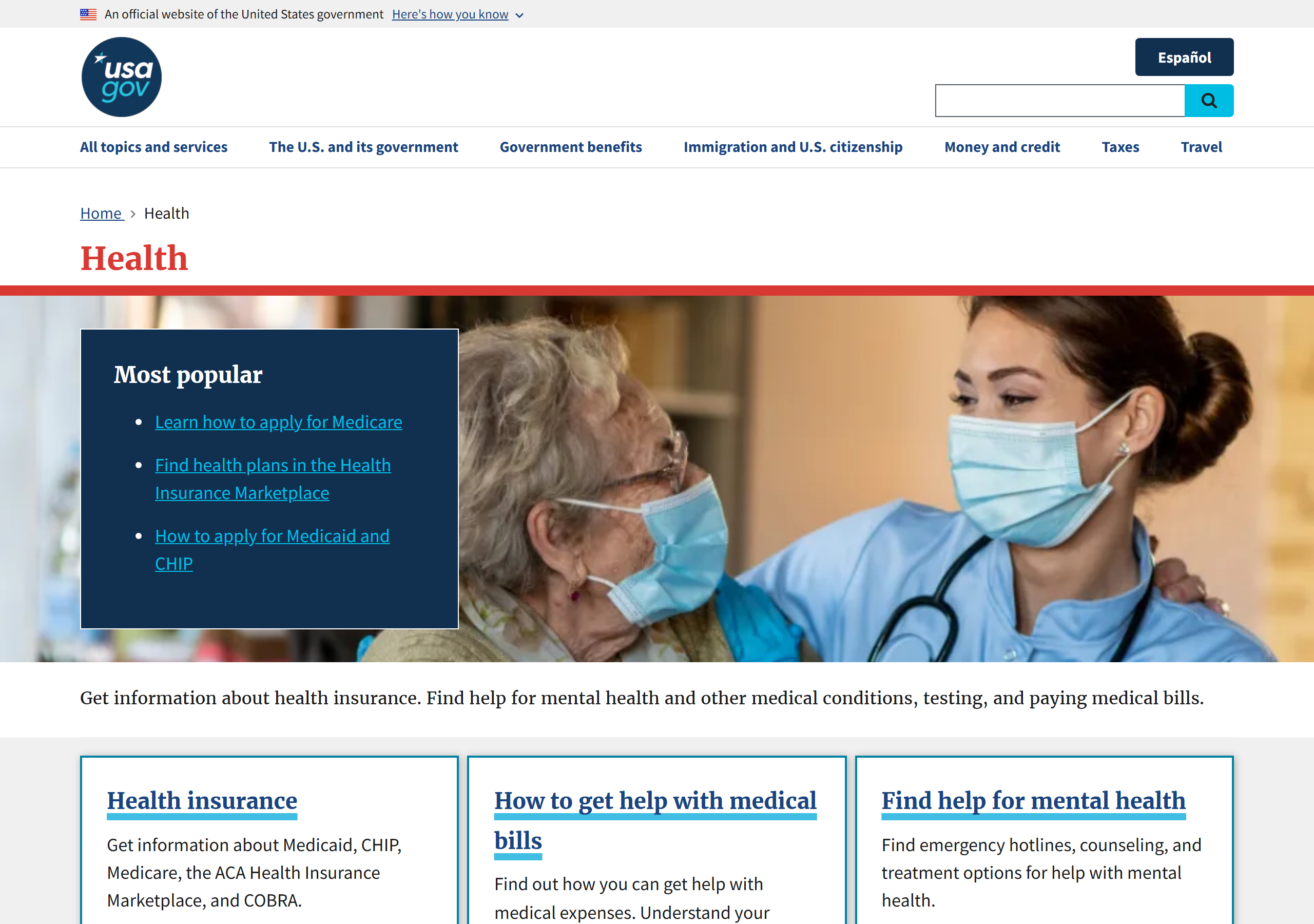
The main ways people pay for care are:
- Employer insurance. Many people get a health plan through their job.
- Medicaid and CHIP. These are free or low-cost programs based on income; CHIP covers children. You apply through your state. Medicaid.gov and HealthCare.gov explain who qualifies.
- The Marketplace. If you do not have insurance through a job, you can buy a plan at HealthCare.gov, often with savings based on income.
- Community health centers and sliding-scale clinics. If you have no insurance, these clinics still see you and charge based on what you can afford.
Primary care is a common first stop
You usually do not go straight to a specialist. A primary care provider is a general doctor or nurse who checks your overall health, treats common problems, and refers you to specialists when needed. For mental health, primary care is often the easiest first door: you can describe how you are feeling, and they can begin treatment or connect you to a counselor or psychiatrist. To see how the mental health side is organized, read how mental health care works in the United States.
You usually need an appointment
Outside of emergencies, care here runs on appointments. You call or go online ahead of time and book a day and time. Walk-ins exist at some clinics, but for most visits, including mental health visits, you schedule first. It is normal to wait days or weeks for a non-urgent appointment.
Costs and coverage matter, so ask first
Because there is no single free system, cost is part of every step. The amount you pay depends on your insurance and the clinic. This is not rude to ask about; clinics expect it. Before you book, it helps to ask two questions: “Do you take my insurance?” and “Do you have a sliding scale or financial assistance?” To understand the words on your plan, see understand cost and insurance. The federal CMS “From Coverage to Care” program walks through using coverage step by step, and HealthCare.gov has free local helpers who can sit with you and explain your options at no cost.
Not everything costs money, even with insurance. Most health plans must cover a set of preventive services at no cost to you when you use an in-network provider, and that list includes screening for depression in adults (HealthCare.gov). So a check-in about how you are feeling can often happen without a bill.
Some care serves everyone, whatever your status
Regardless of immigration status or ability to pay, emergency rooms must treat anyone with an emergency, and community health centers serve everyone on a sliding scale and offer interpreters.
Two doors are open regardless of immigration status or ability to pay. Emergency rooms must treat anyone with an emergency. Under a federal law called EMTALA, any hospital emergency room that takes Medicare must give you a medical screening exam and stabilizing treatment for an emergency, no matter your insurance, your ability to pay, or your immigration status (CMS). This includes a mental health emergency. And community health centers, also called FQHCs, serve everyone, including people who are uninsured or undocumented, charging on a sliding scale and offering interpreters. Find one near you at findahealthcenter.hrsa.gov. For more, see free and low-cost care: community health centers.
At any clinic or hospital that receives federal funding, which includes almost all of them, you have the right to a free, qualified interpreter in your language. You should never be asked to bring your own interpreter or to pay for one, and your child should never be asked to interpret for you (HHS Office for Civil Rights). See your right to a free, qualified interpreter.
If you are worried about immigration status
As of 2026, applying for or using Medicaid, CHIP, or Marketplace coverage does not by itself make you a "public charge," and most health coverage does not count against a green card application. These rules can change, so check with an immigration legal expert or a community health worker before you decide.
Many newcomers avoid care because they fear it could hurt their immigration case. Here is what is true as of 2026. Applying for or using Medicaid, CHIP, or Marketplace coverage does not by itself make you a “public charge,” and most health coverage does not count against a green card application (HealthCare.gov; KFF). Even people who cannot get regular Medicaid because of their status can often get Emergency Medicaid, which pays hospitals for emergency care, including emergency childbirth, for those who meet the income and residency rules (KFF).
If you arrived as a refugee or asylee, you may also qualify for time-limited Refugee Medical Assistance in your first months here; your resettlement agency or state refugee office can tell you what you are eligible for (Office of Refugee Resettlement).
These rules have changed before and can change again, and they depend on your exact situation. So before you make a decision, check with an immigration legal expert or a community health worker; do not guess and do not skip care out of fear. See care if you are undocumented or uninsured.
The rules change by state, so check yours
This is the most important thing to remember: the United States is not one system but fifty state systems plus federal programs. Who qualifies for Medicaid, what is covered, and what services exist all vary by where you live, and the rules for immigrants change over time. So do not assume one rule is true everywhere. To check what applies to you, contact your state Medicaid office or call a local community health center. When a rule depends on your state, LINC points you to a person or your state office instead of guessing.
Sources
- Administration for Children and Families, Office of Refugee Resettlement. Cash & Medical Assistance. https://acf.gov/orr/programs/refugees/cma.
- Centers for Medicare & Medicaid Services. Emergency Medical Treatment & Labor Act (EMTALA). https://www.cms.gov/medicare/regulations-guidance/legislation/emergency-medical-treatment-labor-act.
- Centers for Medicare & Medicaid Services. From Coverage to Care: Navigate Your Coverage. https://www.cms.gov/priorities/health-equity/c2c/navigate-your-coverage.
- HealthCare.gov. Coverage for lawfully present immigrants. https://www.healthcare.gov/immigrants/lawfully-present-immigrants/.
- HealthCare.gov. Get help applying & more. https://www.healthcare.gov/find-assistance/.
- HealthCare.gov. Health Insurance Marketplace. https://www.healthcare.gov/.
- HealthCare.gov. Medicaid & CHIP coverage. https://www.healthcare.gov/medicaid-chip/.
- HealthCare.gov. Preventive health services. https://www.healthcare.gov/coverage/preventive-care-benefits/.
- Health Resources and Services Administration (HRSA). Find a Health Center. https://findahealthcenter.hrsa.gov/.
- KFF. 5 Key Facts About Immigrants and Medicaid. https://www.kff.org/racial-equity-and-health-policy/5-key-facts-about-immigrants-and-medicaid/.
- Medicaid. Official website of Medicaid and CHIP. https://www.medicaid.gov/.
- U.S. Department of Health and Human Services, Office for Civil Rights. Section 1557: Ensuring Meaningful Access for Individuals with Limited English Proficiency. https://www.hhs.gov/civil-rights/for-individuals/section-1557/fs-limited-english-proficiency/index.html.
- National Institute of Mental Health (NIMH). Help for Mental Illnesses. https://www.nimh.nih.gov/health/find-help.
- Substance Abuse and Mental Health Services Administration (SAMHSA). Find Help and Treatment. https://www.samhsa.gov/find-help.
- USA.gov. Health. https://www.usa.gov/health.
- USA.gov. Health insurance. https://www.usa.gov/health-insurance.
LINC is a research prototype, not a medical or legal service. Translation can be wrong; you have the right to a free, qualified interpreter. For anything high-stakes, do it with a community health worker or someone you trust. In a crisis, call or text 988, or 911 for immediate danger.