A no-show fee is a charge some clinics add to your bill if you miss an appointment without calling ahead to cancel. Calling the clinic as soon as you know you cannot come, even the morning of the appointment, usually prevents the charge. It is worth asking about the cancellation policy when you book.
Every health system has its own customs, and the ones in the United States may differ from what you are used to. None of this means your way is wrong; the room is simply unfamiliar, and a little orientation goes a long way. Here is how US clinic visits usually work, described gently and knowing that every clinic and provider is a little different.
- Arrive 10 to 15 minutes early, and call ahead if you cannot make it to avoid a no-show fee.
- Asking questions is welcomed. You are the decision-maker: you can say no, take time to think, or get a second opinion.
- You have the right to a free, qualified interpreter, and you can bring a trusted person for support.
Appointments and arriving on time
Most visits are scheduled in advance, and being on time matters here. It helps to arrive about 10 to 15 minutes early, because clinics often ask you to fill out forms or check in first. If you are running late or cannot come, calling to let them know is normal and appreciated; some clinics charge a fee for a missed appointment, so it is worth a quick call. To get ready for the very first visit, see prepare for your first visit.
Asking questions is welcomed and expected
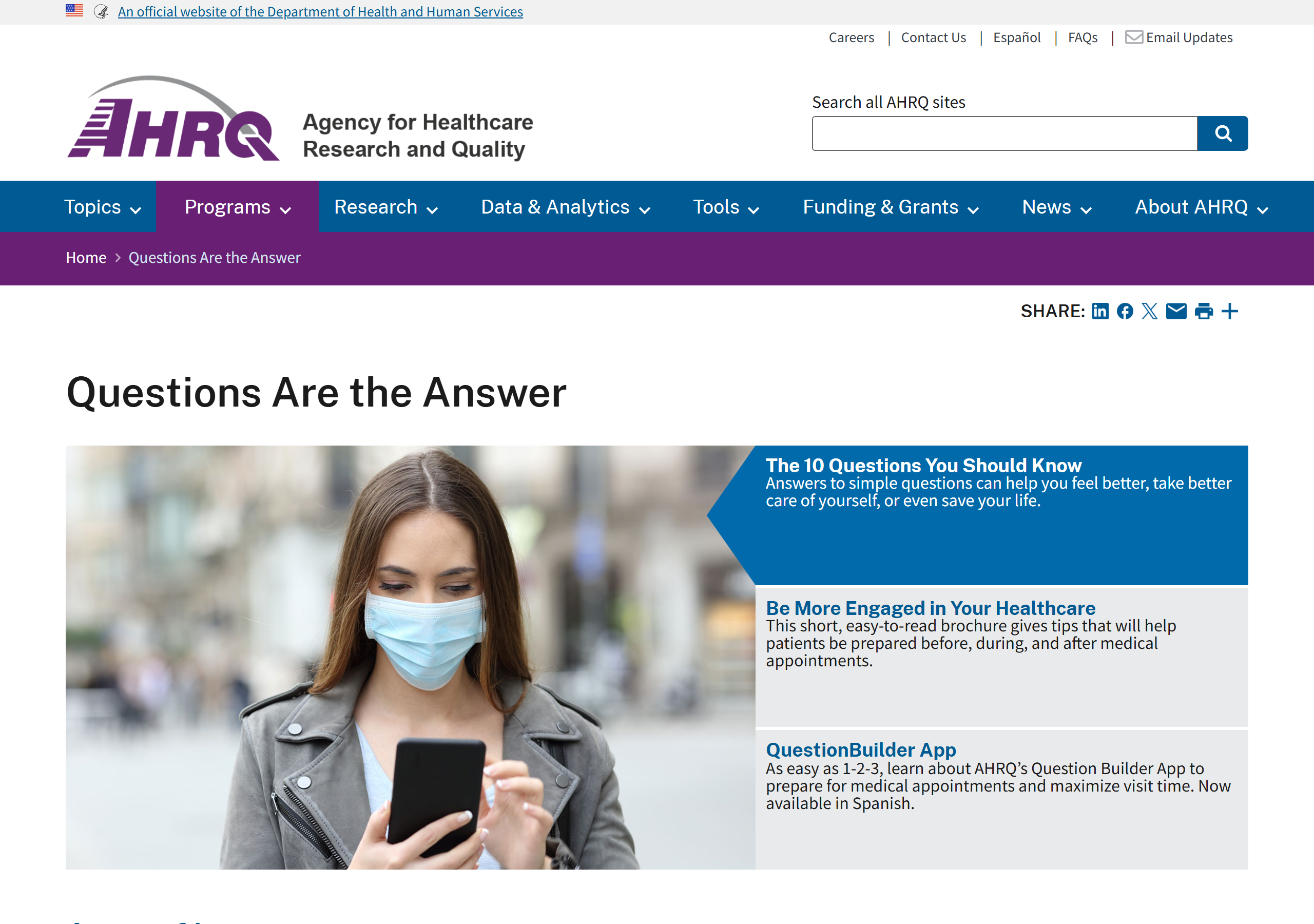
In the US, asking questions is not seen as challenging the provider; it is seen as being a good partner in your own care. Providers expect questions and want you to understand. The federal Agency for Healthcare Research and Quality runs a whole campaign on this, called Questions Are the Answer, with a free Question Builder tool to help you write down what you want to ask. If something is unclear, you can say, “Can you explain that again?” or “What does that word mean?”
A few questions are useful at almost any visit (AHRQ):
"What is this test or treatment for?"
"How do you spell the name of that medicine, and are there side effects?"
"Are there other options I should know about?"
"What do I do next, and when should I come back?"
You can disagree, and nothing is decided without you
This is an important one. In the US, you are the decision-maker about your own care. A provider can recommend a treatment or a medication, but you can ask about other options, take time to think, say no, or get a second opinion. Nothing should happen to your body or your treatment without your understanding and agreement. It is completely acceptable to say, “I would like to think about this,” or “I am not sure I want that yet.”
Confidentiality and consent
What you share in a mental health visit is private. Providers are bound by privacy rules and generally cannot share your information without your permission, with narrow exceptions when someone’s safety is at serious risk. You will also be asked to give consent, meaning you agree to a treatment after it is explained to you. These protections exist to make it safer to speak honestly. To understand the forms you will sign, see what to expect in therapy.
Providers may be direct
Many US providers ask direct questions, including personal ones about your mood, your relationships, alcohol or drug use, or thoughts of harming yourself. This directness is meant to help, not to judge. You can answer at your own pace, and you can tell the provider if a topic is hard to talk about. Honest answers help them help you, but you are always allowed to set the pace.
You can bring a trusted person
You do not have to go alone. You can bring a family member, a friend, or a community health worker for support. They can sit with you, help you remember what is said, and help you feel steadier in the room. Just know that a trusted person is for support; they should not be your interpreter.
You have the right to a free interpreter
You have the right to a free, qualified interpreter so you can speak in your own language, and a child or family member should not be asked to interpret for you. This is protected by federal law under Section 1557 of the Affordable Care Act. When you book, say which language you speak and ask for an interpreter at no cost. The full guide is your right to a free, qualified interpreter.
Customs vary, and so do clinics
Clinics differ by region, by provider, and by the community they serve. Community health centers, for example, often have staff who speak many languages and are used to welcoming newcomers. If one clinic does not feel right, you are allowed to look for another. The point is the same everywhere: this visit is yours, and you belong in the room.
What to bring, and knowing your coverage
A little preparation makes the visit smoother. The federal Coverage to Care program suggests knowing your coverage and being ready before you go (CMS). It helps to bring:
- Your insurance card (if you have one) and a photo ID.
- A list of your medicines, including doses.
- Your questions, written down so you do not forget them.
- A trusted person for support, if you want one.
Before the visit, you can call and ask whether the provider is in your network and what the visit will cost. You can also ask for a provider who speaks your language or, if it matters to you, a woman or a man. It is always okay to ask.
How a visit usually flows, step by step
Knowing the order of a visit can make the room feel less strange. Most visits follow the same simple path.
- Check in at the front desk. Tell them your name and the time of your appointment. They may ask you to sign in and to fill out or update some forms.
- Show your insurance card and a photo ID. The front desk copies your insurance card so the clinic can bill your health plan. It helps to bring both to every visit.
- Pay a copay if there is one. Some plans ask for a small, set amount, called a copay, at the time of the visit. If you are not sure whether you owe anything, you can ask at the desk.
- Have your vital signs taken. A staff member may quickly check your temperature, pulse, breathing rate, and blood pressure. These are called vital signs, and they are a normal part of most visits (MedlinePlus). At a mental health visit you may also fill out a short questionnaire about your mood.
- Wait to be called. Sit in the waiting area until a staff member calls your name. Wait times vary, so the questions you brought are useful here.
- Meet the provider. This is your time. Share what brought you in, ask your questions, and go at your own pace. If you need an interpreter, one should be present for this part.
- Check out and plan the next step. On your way out you may schedule a follow-up visit, get written instructions to take home, or be handed a prescription. If anything is unclear, ask before you leave.
After the visit, follow the plan you agreed on, fill any prescriptions, and keep any follow-up appointment.
The kinds of mental health providers
More than one kind of professional can help with mental health, and it helps to know who does what.
- A primary care doctor is often a good first step. They can check your overall health, do a first mental health screening, treat some conditions, and refer you to a specialist when you need one (NIMH).
- A therapist or counselor does talk therapy, also called psychotherapy. This is a series of conversations that help you understand and change troubling thoughts, feelings, and behaviors. Social workers, counselors, and psychologists are among the professionals who provide it (NIMH).
- A psychiatrist is a medical doctor who focuses on mental health and can prescribe and manage medicine. Some people see a psychiatrist for medicine and a therapist for talk therapy at the same time.
Visits come in different lengths. A talk therapy session is often about 45 to 60 minutes, and many people start by going once a week. A visit just to start or check a medicine is usually shorter, often about 15 to 30 minutes. You can always ask how long a visit will be and how many visits your provider suggests (NIMH). To learn what the first therapy sessions feel like, see what to expect in therapy.
Video visits, also called telehealth
You do not always have to travel to the clinic. Telehealth means getting care from a distance, usually through a phone call or a video chat on a computer, tablet, or phone (MedlinePlus). Many mental health visits can be done this way, and you can ask the clinic whether a video visit is an option for you.
A few things help a video visit go smoothly. Find a quiet, private place where others cannot overhear you, so you can speak openly. Test your internet, camera, and sound a little before the visit starts. Keep your list of medicines and your questions nearby. Your right to a free interpreter does not change on video; when you book, say you want the visit in your language and ask for an interpreter to join. See your right to a free, qualified interpreter.
The patient portal
Many clinics offer a patient portal, a secure website or app for your care. After you sign up, you can use it to message your provider with questions, view your test results, ask for prescription refills, make non-urgent appointments, read a summary of your visit, and pay a bill, all in one place (MedlinePlus). It is a convenient way to reach your care team between visits. One caution: a portal is not for emergencies. If something is urgent, call the clinic, and in a crisis call or text 988.
Prescriptions and the pharmacy
If your provider decides you need a medicine, they usually send the prescription straight to a pharmacy you choose. You pick it up there, and the pharmacist can explain how and when to take it. It is always okay to ask the pharmacy for an interpreter or for the label in your language. When your medicine is running low, you can ask for a refill through the pharmacy, the patient portal, or a call to the clinic.
Two things matter with mental health medicine. Do not stop taking it on your own, even if you feel better; ask your provider first, because they can lower the dose slowly and safely. And call your provider right away if the medicine worries you or does not feel right, so they can help you decide what to do next (NIMH).
Changing or canceling an appointment
Plans change, and that is fine. If you cannot make a visit, call the clinic as early as you can. Many clinics ask for at least 24 to 48 hours notice to change or cancel, and giving notice helps you avoid a no-show fee and frees the time for someone else. When you call, you can usually reschedule for a better day in the same conversation. If you are simply running late, call and ask whether they can still see you.
If you feel disrespected or treated unfairly
You have the right to be treated with respect and to not be discriminated against in your care (MedlinePlus). If a visit does not feel right, you have options. You can ask to speak with the clinic’s patient relations office or a patient advocate, staff whose job is to help you through the system and protect your rights. You can also file a grievance, which is a formal complaint, with the clinic or your health plan; the front desk can tell you how.
If you believe you were treated unfairly because of your national origin or the language you speak, that is a civil rights matter. You can file a complaint with the U.S. Department of Health and Human Services Office for Civil Rights (MedlinePlus). The right to language help is protected by federal law under Section 1557 of the Affordable Care Act. None of this changes the care you receive; asking for fair treatment is your right.
Finding care and more help
If you are still looking for a provider, there are free tools. FindTreatment.gov is a federal locator that helps you find mental health and substance use treatment near you (SAMHSA). Your health plan’s website also lists providers in your network, and a community health center often has staff who speak many languages. For emotional support any time, the 988 Suicide and Crisis Lifeline is free, confidential, and open 24 hours a day, with help in English and Spanish (SAMHSA).
Sources
- Agency for Healthcare Research and Quality. Question Builder. https://www.ahrq.gov/questions/question-builder/online.html.
- Agency for Healthcare Research and Quality. Questions Are the Answer. https://www.ahrq.gov/questions/index.html.
- Agency for Healthcare Research and Quality. The 10 Questions You Should Know. https://www.ahrq.gov/questions/10questions.html.
- Centers for Medicare & Medicaid Services. From Coverage to Care: Navigate Your Coverage. https://www.cms.gov/priorities/health-equity/c2c/navigate-your-coverage.
- HHS Office for Civil Rights. Section 1557: Ensuring Meaningful Access for Individuals with Limited English Proficiency. https://www.hhs.gov/civil-rights/for-individuals/section-1557/fs-limited-english-proficiency/index.html.
- MedlinePlus. Patient portals: an online tool for your health. https://medlineplus.gov/ency/patientinstructions/000880.htm.
- MedlinePlus. Patient rights. https://medlineplus.gov/patientrights.html.
- MedlinePlus. Telehealth. https://medlineplus.gov/telehealth.html.
- MedlinePlus. Vital signs. https://medlineplus.gov/ency/article/002341.htm.
- National Institute of Mental Health. Help for Mental Illnesses. https://www.nimh.nih.gov/health/find-help.
- National Institute of Mental Health. Mental Health Medications. https://www.nimh.nih.gov/health/topics/mental-health-medications.
- National Institute of Mental Health. Psychotherapies. https://www.nimh.nih.gov/health/topics/psychotherapies.
- Substance Abuse and Mental Health Services Administration. Find Help and Treatment. https://www.samhsa.gov/find-help.
LINC is a research prototype, not a medical or legal service. Translation can be wrong; you have the right to a free, qualified interpreter. For anything high-stakes, do it with a community health worker or someone you trust. In a crisis, call or text 988, or 911 for immediate danger.